Filters
Filters
- Masters
- Master degree
- Asia
- Japan
- Engineering Programs
Sort by
30 Engineering Master's Degree Programs in Japan
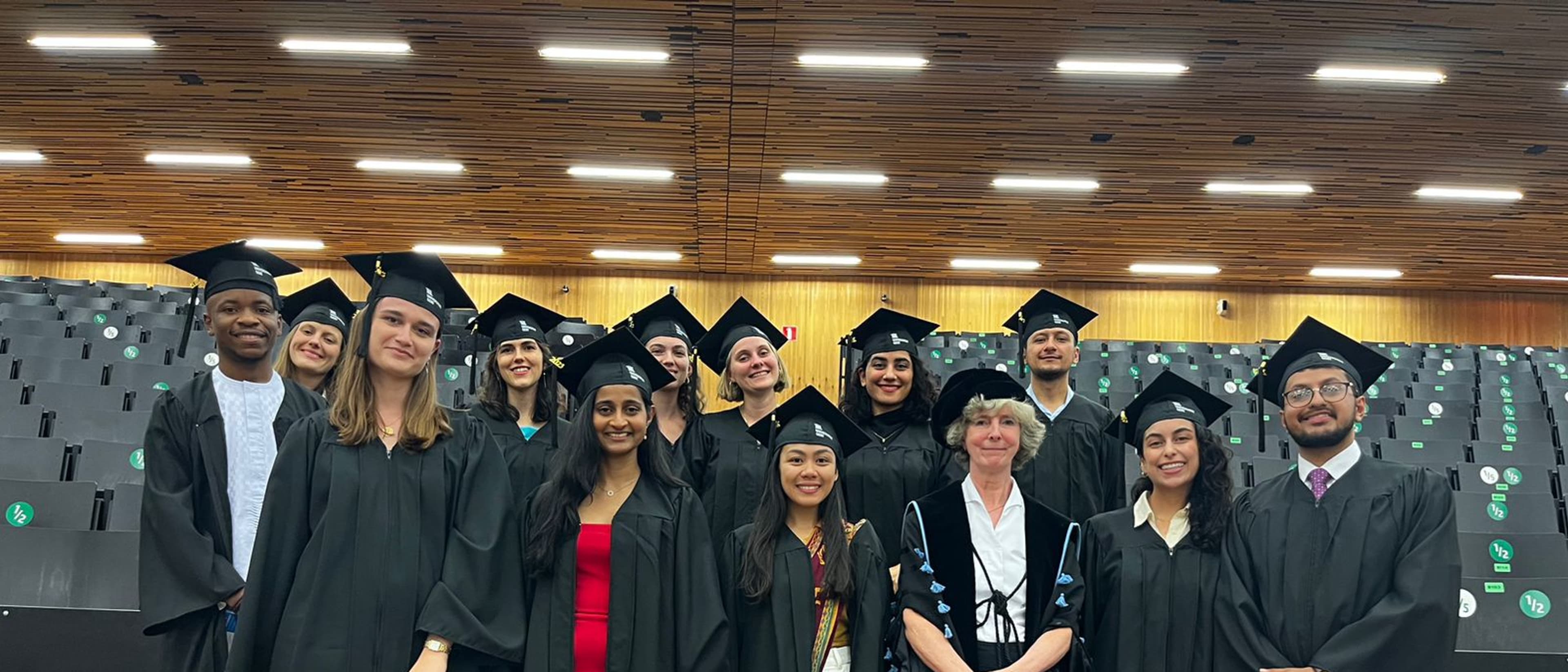

Ghent University - Faculty of Engineering and Architecture
International Master of Science in Textile Engineering
- Kyoto, Japan
- Ghent, Belgium
- + 2 more
Master degree
Full time
2 years
On-Campus
English
The International Master of Science in Textile Engineering is a 2-year master programme educating the next generation of textile engineers. The first semester you will study at Ghent University in Belgium, the second semester at the Polytechnical University of Valencia in Spain (for the academic year 2022-2023), the third semester you can choose between the University of Borås in Sweden or the Kyoto Institute of Technology in Japan. During the fourth semester, you do a thesis at one of the partner universities. So you will study in Europe (and Japan). The professors teaching you come from all over the world.


Kurume Institute Of Technology
Master in Energy System Engineering
- Kurume, Japan
Master degree
On-Campus
In the 21st century, it is required to build a sustainable and circulating society in which global environments such as food, water, air, forests, and energy are secured. Especially in Japan, where energy resources are scarce, experts in the field of energy are needed. This course is aimed at fostering engineers capable of analyzing and solving energy-related problems such as securing energy resources, improving energy conversion efficiency, and developing energy efficiency technologies. Courses covering 3 engineering fields - heat/fluid energy engineering, energy device system engineering, and architectural/environmental system engineering are provided with faculty from a variety of fields and business enterprise experience. Energy System Engineering is looking for the passion of youth for the future.
Best programs for you
Answer a few questions and we'll match you with programs!

Kobe University - Kobe
Master in Agricultural Engineering Socio-and Economics
- Kobe, Japan
Master degree
On-Campus
English
With the advent of a population explosion in developing countries and increasing global environmental problems, there is a growing concern for the world food supply in the near future. In particular, the considerably low food self-sufficiency ratio of Japan requires the establishment of a stable food supply system.
Kurume Institute Of Technology
Master in Automotive System Engineering
- Kurume, Japan
Master degree
On-Campus
The purpose of this course is to foster highly specialized engineers capable of development, research, and production in the fields of advanced automotive engineering and electronic control engineering among others. In this course, students learn specialized fields by selecting courses systematically based on the curriculum of 5 fields: mechanical engineering, traffic mechanical engineering, automotive system's fundamental courses combined with automotive engineering and electric/electronic system, engine dynamics, development/designing/production engineering, and safety/environment engineering. The teaching faculty is comprised of several automobile manufacturing industry experts who have experience in development, research, and design in major automobile companies.

Fukui University Of Technology
Master in Civil Engineering
- Fukui, Japan
Master degree
On-Campus
Through education and research in the fields of civil engineering planning, hydroengineering, environmental engineering, geotechnical engineering, and structural engineering, we cultivate talent who can contribute to the building of a safe and secure society by planning, designing, implementing, maintaining, and managing social infrastructure facilities, while also considering the preservation of the natural environment. To this end, we welcome the following students. 1.Students who aim to play an active role in fields such as infrastructure planning and design as engineers specializing in civil engineering and the environment. 2.Students who have a deep interest in civil engineering and construction technology and aim to serve as engineers in construction companies or other related areas. 3.Students who aspire to work actively in a broad range of fields from the government to design consultancies and construction firms as civil engineers and environmental engineers.

Tottori University
Master in Mechanical and Aerospace Engineering
- Tottori, Japan
Master degree
On-Campus
Possessing the human resources necessary for meeting a wide variety of needs in engineering fields, the Course of Mechanical and Aerospace Engineering nurtures high-level engineers and researchers who are able to develop technologies from an interdisciplinary perspective, rather than from a stereotyped viewpoint. They are not restricted to just mechanical engineering but are also proficient in the fields of aerospace, material, electronics, information, and environmental engineering. This course allows students to acquire high levels of expertise and engage in original research; this enables them to develop so that they can aggressively assume leadership in solving problems. Specifically, students are trained to acquire the following: A broad and fundamental knowledge of mechanical engineering, and also advanced expertise in applied mathematics, mechanics, and physics, that provide a foundation for entering advanced interdisciplinary engineering fields such as space engineering A flexible way of thinking and insight to view problems macroscopically by considering the harmony between the natural environment and human society, and also lead to solving problems systematically. Applicants are expected to appreciate this policy and to be highly motivated. They are required to possess academic attainments in mathematics and physics employed in engineering as well as linguistic ability. Mechanical and Aerospace Engineering Field Solid mechanics, Materials science and engineering, Reliability and design engineering, Precision and production engineering, Mechanical dynamics and mechatronics, Control and robotics, Thermal energy engineering, Fluid engineering, Fluid dynamics, Condensed matter physics, Non-linear dynamics, Nanomechanics, Biomechanics, Thermodynamics

Yamaguchi University
Master in Mechanical engineering
- Yamaguchi, Japan
Master degree
On-Campus
This division seeks to develop high-level specialized professionals that can practically research and develop environment and energy systems, aerospace systems, medical support systems, and intelligent machine systems, and who have the ability to discover and solve problems while effectively communicating and presenting. To do this, it gives students an academic grounding in mechanical engineering that covers knowledge involving system engineering, design production engineering, and mechanical energy, which form the core of specialized learning in the field of mechanical engineering. Accordingly, this program desires the following kinds of students for each course.

Setsunan University
Master's Course Division of Social Development Engineering
- Hirakata, Japan
Master degree
On-Campus
In the study of social development engineering, students carry out research from the viewpoint of social development and environmental preservation, based on civil engineering, architecture, and environmental engineering. More specifically, they are first expected to evaluate and analyze local development, urban development, and their effects on the surrounding environment. Then, they proceed to study urban and architectural planning, structural mechanics, and environmental engineering for living in an integrated way, which are basic technology of scientific and engineering techniques for environmental development and preservation. There are three target areas in this major, which are "urban and architectural planning," "structural engineering," and "environmental engineering."

Yamagata University
Master in Organic Material Engineering
- Yamagata, Japan
Master degree
On-Campus
This graduate school was established as a new graduate school in April 2016 by progressively integrating and expanding the Department of Functional Polymer Engineering and the Department of Organic Device Engineering of the Graduate School of Science and Engineering. It consists of one major, the Department of Organic Material Systems, and strives for consistency of education in cooperation with the education system of the Department of Polymer and Organic Material Engineering, Faculty of Engineering. Amid the diversification of manufacturing and the sophistication of technology, we aim to improve the planning ability of new functional materials required of leaders who can win standardization at the world level, and the communication ability through participation in international conferences, etc., globally. We are conducting education and research on human resource development aimed at leaders. We request highly specialized professionals who can lead the world by making the most of the environment where we can get close to the cutting edge of the organic material system field.

Toin University Of Yokohama
Engineering Master's Program
- Yokohama, Japan
Master degree
On-Campus
We will train researchers who have the ability to acquire knowledge in specialized fields related to engineering, propose new theories and technologies through research and experiments, and respond to international research presentation activities.

Hiroshima Institute Of Technology
Master in Construction Engineering
- Hiroshima, Japan
Master degree
On-Campus
We train engineers with advanced academic knowledge and the ability to carry out construction engineering. Focusing on the three fields of "building structure," "social infrastructure," and "planning/environment," a wide range of construction engineering, including advanced construction technology, national and regional utilization plans, urban development/maintenance planning, and disaster prevention / environmental conservation technology. Learn knowledge and skills, and cultivate an attitude of engaging in research on your own. We will foster engineers who can create safer and more comfortable living spaces and utilize the results in society.
Hiroshima Institute Of Technology
Master in Electrical and Electronic Engineering
- Hiroshima, Japan
Master degree
On-Campus
We will develop human resources who have specialized education in electrical and electronic engineering and a broad perspective. Established four educational fields of "electronic physical properties," "circuits," "energy," and "information and communications" for the development of new materials and devices. Now that advanced electrical and electronic engineering technology has become indispensable as a core technology that supports the highly information-oriented society, we will develop human resources with a wide range of perspectives and specialized backgrounds.

Chubu University
Master in Hydraulic Engineering
- Kasugai, Japan
Master degree
On-Campus
The topics of learning and research include the theories and analysis methods concerning the hydrodynamics and the conveyance system in bays, rivers, lakes and reservoirs. Using such theories and analysis methods, studies are conducted for the improvement of issues such as water quality and environmental problems, and the water hazard problems of storm surge, flood, inundation, etc.

Kogakuin University
Master in Mechanical Engineering
- Shinjuku City, Japan
- Hachioji, Japan
Master degree
On-Campus
Mechanical engineers are required to possess sophisticated expertise and broad discernment to be able to offer solutions for problems such as environmental pollution, global warming, and energy-related issues. This program offers about sixty-course subjects in the master's program to enable students to acquire everything from diverse fundamental mechanical engineering skills to cutting-edge specialized expertise.

Kochi University Of Technology
Master in Intelligent Mechanical Systems Engineering Course
- Kami, Japan
Master degree
On-Campus
In the field of mechanical engineering, there is now a need for innovative technological development which harmonizes with issues such as globalization, informatization, the aging society, and environmental problems. This course focuses on education and research/development of technology whose importance will increase in the future, and that will lead to change in the social structure. Such technology includes robotics and mechatronics, intelligent information technology, and human-related technology. We foster engineers who can value the interface among research fields, and are not confined to the single field of ordinary mechanical engineering.
Popular Engineering Programs degree types
Popular study format
Learn more about Engineering Master's degree programs in Japan
Pursuing a Master's degree in Engineering in Japan offers a unique blend of advanced theoretical knowledge and practical application. You'll engage with cutting-edge technologies while preparing for various global opportunities in engineering fields.
In this program, students delve into specialized areas such as robotics, sustainable energy, and materials science. You'll learn to design and optimize complex systems, applying skills like developing advanced modeling tools and conducting rigorous experimental analyses. The curriculum emphasizes research, enabling you to contribute to innovative projects while collaborating with peers and industry partners.
The Japanese education system fosters an environment that promotes critical thinking and technical expertise. As students engage with diverse methodologies, they build confidence and adaptability, preparing for careers that require strong analytical and problem-solving abilities. This approach aligns with Japan's emphasis on technological advancement and innovation, equipping you with skills that are valued worldwide. Graduates commonly pursue roles in areas such as research and development, manufacturing, and product design, making a significant impact in their chosen industries.