

University College London (UCL)
Ethnographic and Documentary Film (Practical) MA
London, United Kingdom
MA
DURATION
2 years
LANGUAGES
English
PACE
Full time, Part time
APPLICATION DEADLINE
EARLIEST START DATE
Sep 2026
TUITION FEES

STUDY FORMAT
On-Campus
The program focuses on helping students develop practical skills in ethnographic and documentary filmmaking. It offers hands-on training in the art of creating compelling films that explore human experiences and cultural stories. Throughout the course, students learn to plan, shoot, and edit their projects while gaining a deep understanding of ethnographic research methods. The aim is to prepare students to produce films that are both visually engaging and academically meaningful, often combining practical work with theory.
Students can expect a flexible learning environment that encourages creative exploration and critical thinking. The program emphasizes collaborative work and individual projects, giving students the chance to develop their unique voice as filmmakers. It also offers opportunities for students to engage with professional filmmakers and researchers, expanding their networks and understanding of the industry. This practical-focused approach is designed to equip students with the skills and confidence needed to pursue careers in documentary filmmaking, research, or related fields in media and cultural studies.
UCL Scholarships
There are a number of scholarships available to postgraduate students, including our UCL Masters Bursary for UK students and our UCL Global Masters Scholarship for international students. You can click the link below to search via the scholarships finder for awards that you might be eligible for. Your academic department will also be able to provide you with more information about funding.
External Scholarships
Online aggregators like Postgraduate Studentships, Scholarship Search, Postgraduate Funding and International Financial Aid and College Scholarship Search contain information on a variety of external schemes.
If you have specific circumstances or ethnic or religious background it is worth searching for scholarships/bursaries/grants that relate to those things. Some schemes are very specific.
Funding for disabled students
Master's students who have a disability may be able to get extra funding for additional costs they incur to study.
Teaching and learning
The programme is delivered through a combination of seminars, lectures, practical exercises, tutorials and masterclasses.
While planning and producing your final project, you will benefit from one-to-one supervision from a mentor.
You will be assessed through a series of formative exercises (exercises for which you will receive feedback but do not count toward the degree) and summative exercises (exercises for which you will receive feedback and do count toward the degree), including film works of varying lengths and styles; critical evaluations; and your final project.
- Term one: In term one, contact hours typically amount to 180 hours.
- Term two: In term two, contact hours typically amount to 120 hours.
- Term three and over the summer: In term three and over the summer, contact hours typically amount to 65 hours with mentors, editing tutors and in supervised screenings and tutorials.
Part-time students only take their core module during term 1 and term 2 of their first year, which amounts to maximum 3 days a week per term on campus.
Modules
Full-time
Across the first and second terms, you will take the compulsory Documentary and Ethnographic Film Practice module, during which you will produce two examinable short films (7-10 minutes in duration) and accompanying critical evaluations. You will also regularly complete short film exercises in preparation for these two films. You will also take two optional taught postgraduate modules.
From April, under the guidance of a mentor, you will work on your graduation film, which forms the centrepiece of the portfolio of films you will produce on the MA and will be between 18-30 minutes in length.
Part-time
As a part-time student, you will complete your degree across two years. In the first year, you will take the compulsory Documentary and Ethnographic Film Practice module.
You will choose whether to take your two optional modules in the second year, or one in the first year and one in the second.
From April of your second year, under the guidance of a mentor, you will work on your graduation film, which forms the centrepiece of the portfolio of films you will produce on the MA and will be between 18-30 minutes in length.
Compulsory modules
- Documentary and Ethnographic Film Practice (Core Course)
- Practical Film Project
Optional modules
- Developments in Global Cinema
- The Story and I - Finding the Form: A Practical Exploration of Storytelling
- Experimental cinema and new media: Form and narrative
- Documentary Radio - A Practice-Based Introduction
- An Introduction to Social Theory - a foundation course
- History and Aesthetics of Documentary
- Feature Writing in a Multi-Media World: Journalistic Skills for the Digital Age
- Interactive Factual Narratives
- Developing Ideas for Non-Fiction Film and Audio
Please note that the list of modules given here is indicative. This information is published a long time in advance of enrolment and module content and availability are subject to change.
Students undertake modules to the value of 180 credits. Upon successful completion of 180 credits, you will be awarded an MA in Ethnographic and Documentary Film (Practical).
What this course will give you
You will receive training in the fundamentals of ethical documentary filmmaking, from the development and research of ideas to the production and post-production of films; you will receive training in camera equipment, sound recording and film editing. You will be loaned your own camera kit for the duration of your studies, avoiding the need to check equipment in and out, and benefit from full access to editing suites.
UCL houses London's global non-fiction film festival, Open City Documentary Festival, giving you a unique opportunity to engage with the global creative non-fiction industry.
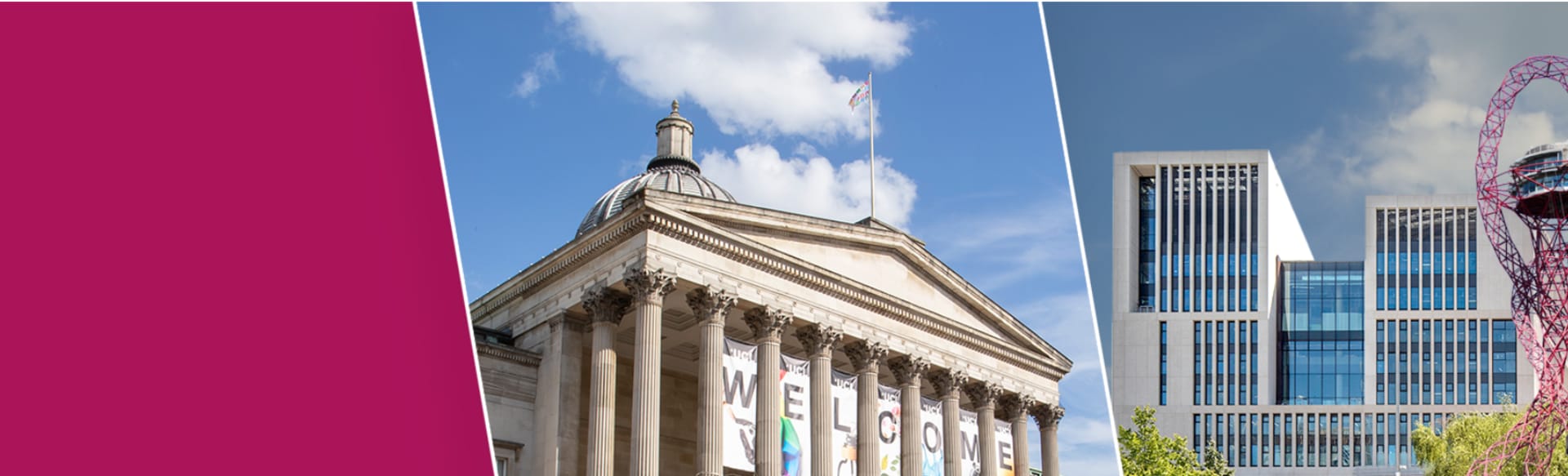
This degree is based at our brand new UCL East campus in East London, forming part of the School for Creative and Cultural Industries. You will benefit from cultural and educational connections with our East Bank partners, including the V&A and BBC, as well as state-of-the-art facilities, including exhibition, performance and curating spaces, conservation studios and a 160-seater surround-sound cinema.
You will also develop demonstrable competencies transferable to any profession, including complex problem solving and creative initiative; communication skills; effective independent and team working; leadership; and time and project management.
The foundation of your career
Graduates of the Ethnographic Documentary Film (Practical) MA have gone on to pursue careers in a range of industry sectors, including:
- Media (Film & TV).
- IT, Technology and Telecommunications.
- Publishing, Journalism and Translation.
- PR, Advertising and Marketing.
- Performance and the Creative arts.
Graduate job titles have included:
- Arts officers (film directors, producers, camera operators, film editors, researchers, videographers, digital content creators).
- Business and related research professionals.
- Marketing associate professionals.
- Photographers, audio-visual and broadcasting equipment operators.
- Newspaper and periodical journalists and reporters.
(Graduate Outcomes survey, aggregated over the five most recent surveys [2017-18, 2018-19, 2019-20, 2020-21 and 2021-22])
Employability
You will graduate with a wide range of both creative audio-visual storytelling skills, including videography, sound recording and audio and video editing skills, as well as creative thinking and organisational skills. These will equip you to pursue a successful career in the film and wider creative industries or any profession requiring strong project management, problem-solving and communication skills.
Networking
As a student in the Department you have access to many opportunities to help further your career:
- You will become part of the department's Public Anthropology section, learning from and networking with leading internal and external filmmakers including directors, producers, cinematographers, sound designers film editors and film academics through a weekly series of screenings and masterclasses.
- You will be encouraged to attend complementary departmental seminars given by active researchers in environmental, evolutionary and social anthropology and material, visual and digital culture throughout your studies.
- You will benefit from cultural and educational connections with our East Bank partners, including the V&A and BBC Music.
- You will be encouraged to take advantage of the broader creative, factual storytelling and filmmaking communities at UCL, our neighbouring institutions and across London more widely, including attending and participating in festivals, seminars, conferences, exhibitions and research partnership opportunities to help you establish industry connections and extend your professional networks.
- You will be encouraged to engage with the department’s active careers support activities and initiatives, which include regular career development seminars and networking events.
All students are encouraged to host and/or participate in a Reading and Research Group (RRG), which are open spaces to exchange ideas on themes of mutual interest and welcome staff and student participation from across UCL and our neighbouring institutions.