Filters
Filters
- Masters
- Master degree
- North America
- USA
- Natural Sciences Programs
Sort by
576 Natural Sciences Master's Degree Programs in USA

Promoted
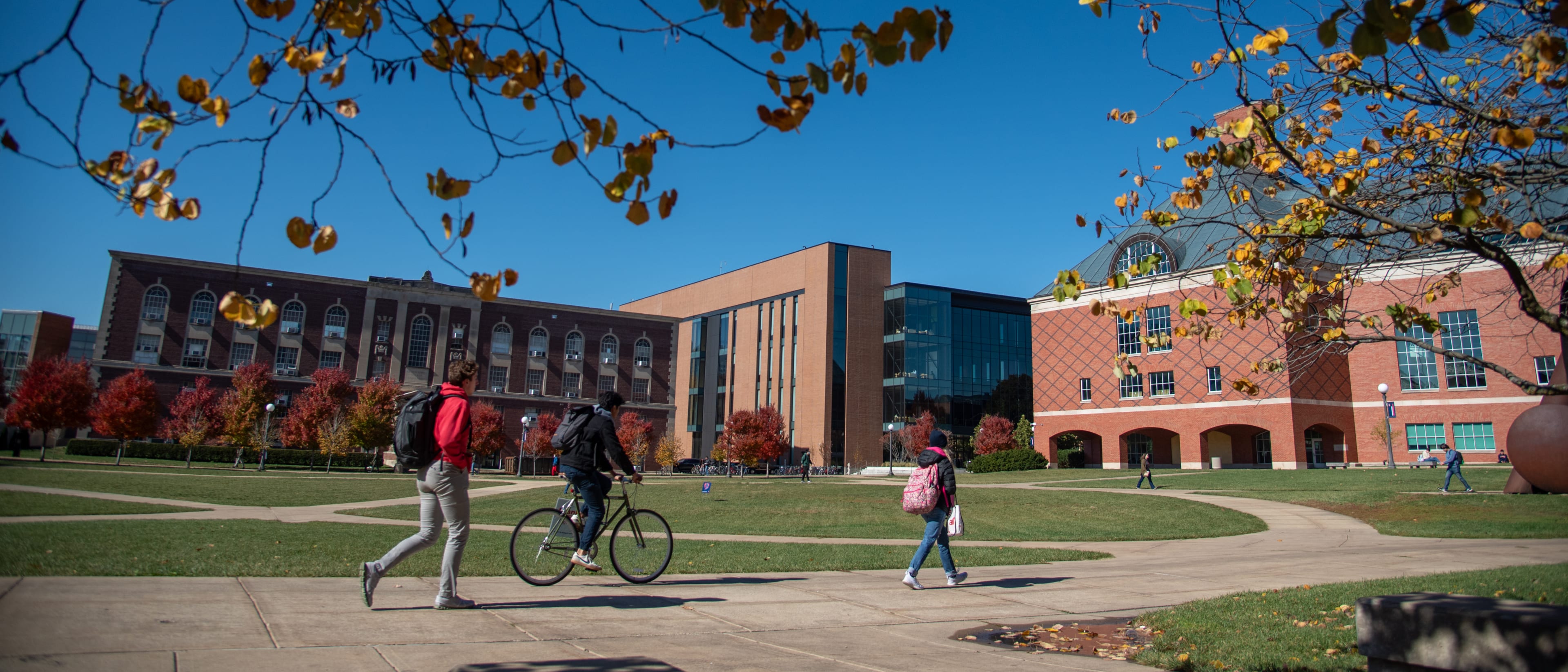
University of Illinois Urbana-Champaign – The Grainger College of Engineering
Master of Engineering (M.Eng.) in Chemical Engineering Leadership
- Online USA
Master degree
Full time, Part time
2 years
Distance Learning, On-Campus
English
Our M.Eng. in Chemical Engineering Leadership program strives to provide world-class training opportunities to meet the critical needs of industries. Our M.Eng. program leverages the expertise of The Grainger College of Engineering and the Gies College of Business — which are both highly ranked schools by U.S. News and World Report — to equip graduates with the technical knowledge and business acumen to advance the industry and deliver success in a dynamic environment.
Promoted
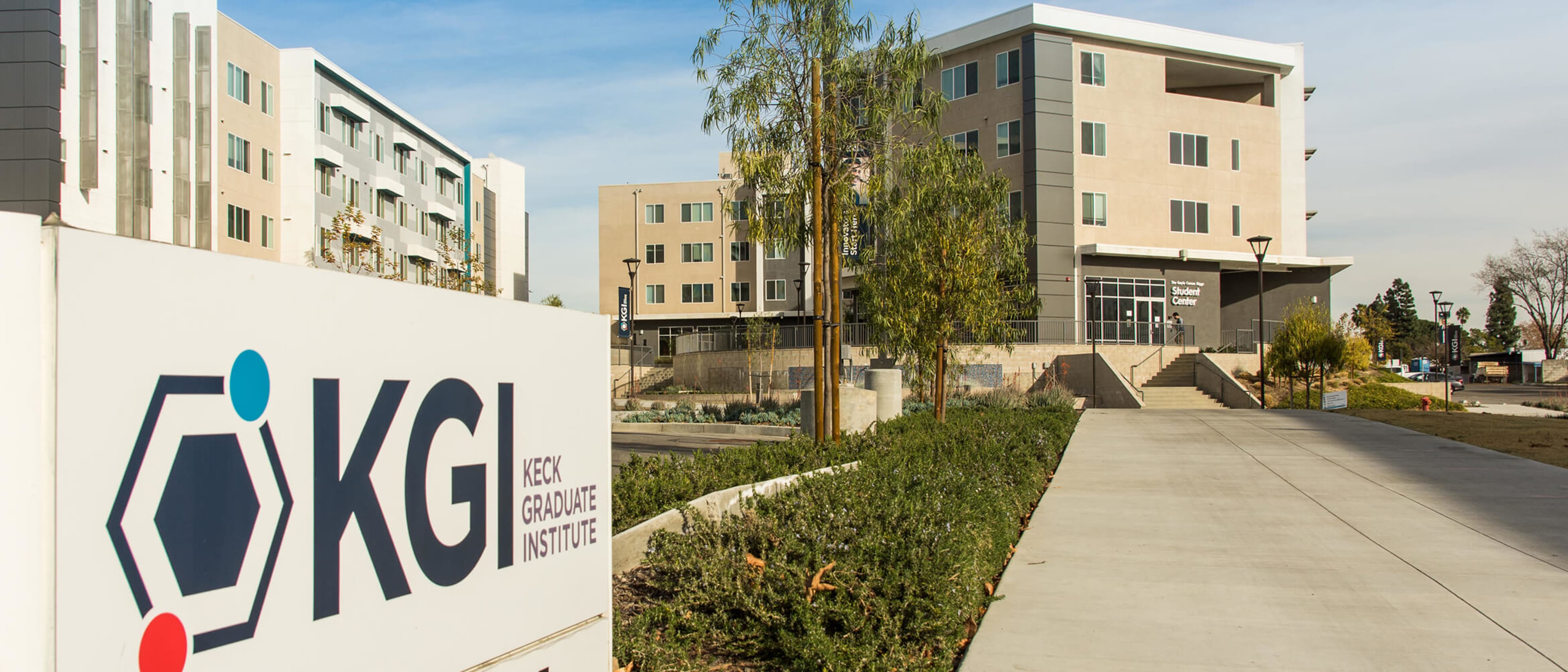
Keck Graduate Institute
M.S. in Applied Life Sciences (In person
- Claremont, USA
Master degree
Full time
2 years
On-Campus
English
The two-year MS program prepares students for careers in translational, clinical, and public health research. Through intensive instruction, students learn to transform scientific discoveries into medical innovations, gaining a deep understanding of research application in medical science and healthcare management.

Promoted
Stevens Institute of Technology - Graduate Studies
Chemical Engineering Master's Program
- Hoboken, USA
Master degree
Full time
On-Campus
English
In the chemical engineering master’s program at Stevens, you’ll have a wealth of resources at your disposal for pursuing the research that interests you most. Our program offers you the best of both worlds: a department with a community of experienced faculty and top-quality research facilities—and an entrepreneurial environment small enough to champion your talent and vision.

New Mexico Highlands University
Masters in Computer and Math Sciences
- Las Vegas, USA
Master degree
Full time
2 years
On-Campus
English
The Department of Computer Sciences offers graduate courses in computer science. In addition, a joint media arts and computer science degree is offered by the Department of Computer Science and the Department of Communication and Fine Arts. The Department of Computer Science trains students in the fields of computer science.

South Dakota - School of Mines and Technology
Master of Science in Atmospheric & Environmental Sciences
- Rapid City, USA
Master degree
Full time
2 years
On-Campus
English
The Atmospheric and Environmental Sciences Program studies the physical, chemical, and biological processes that affect the composition and dynamics of the atmosphere. Research is directly linked to an undergraduate and graduate program that provides a fundamental understanding of the atmosphere, and opportunities for applied research, theoretical research, and technical training to prepare students for careers in meteorology, atmospheric science, remote sensing and environmental technology and science.
Best programs for you
Answer a few questions and we'll match you with programs!


University of Rhode Island - URI Online
Professional Science Masters
- South Kingstown, USA
Master degree
Part time
Distance Learning
English
The University of Rhode Island’s Professional Science Master’s (PSM) program combines advanced scientific training with professional skills in leadership, communication, and management to prepare graduates for success in science-driven industries.
South Dakota - School of Mines and Technology
Master of Science in Chemical Engineering
- Rapid City, USA
Master degree
Full time
2 years
On-Campus
English
Our master of science degree in chemical engineering is ranked #2 in the nation by Masters Program Guide who bases their rankings on four major factors: earnings potential, affordability, student satisfaction, and selectivity.
The University of North Carolina at Charlotte
Bioinformatics (MS)
- Charlotte, USA
Master degree
Full time
35 hours
On-Campus
English
A unique master’s degree merging the biological sciences and computer technology, the M.S. in Bioinformatics is an interdisciplinary program at the intersection of the disciplines of Biology, Chemistry, Mathematics and Statistics, Computing and Informatics, and Engineering.
Keck Graduate Institute
M.S. in Human Genetics and Genomic Data Analytics (In person)
- Claremont, USA
Master degree
Full time
21 months
On-Campus
English
The MSGDA program equips students for careers in genomic data analytics through coursework in human genetics, applied life sciences, and human genomics. Collaborate with genetic counselors and scientists, gaining hands-on experience with technologies shaping the future of medicine.
Rice University | Wiess School of Natural Sciences
Master in Applied Chemical Science
- Houston, USA
Master degree
Full time, Part time
1 year
On-Campus
English
The Applied Chemical Sciences program will prepare students with chemistry backgrounds for employment in chemical industries, energy industry, medical or pharma, or government / non-profit organizations. These graduates will target jobs that are different from the more technically focused Ph.D. in Chemistry and/or Master’s in Chemical Engineering. The program offers an enhancement of various chemical topics that can be directly applied to specific industrial, technological, and medical purposes. It consists of three separate areas of specialization reflecting the importance of chemical sciences in multiple technological applications: Petroleum Chemistry; Bioorganic Chemistry; Computational Chemistry and Data Science.
The University of North Carolina at Charlotte
Health Informatics and Analytics (MS)
- Charlotte, USA
Master degree
Full time
36 hours
On-Campus
English
The M.S. in Health Informatics and Analytics develops practitioners who bridge data sciences and analytics in support of optimal population health. It leverages the strengths of the Health and Human Services and Computing and Informatics Colleges to help prepare you for this exciting endeavor.

University of San Francisco - College of Arts & Sciences
Master in Biotechnology
- San Francisco, USA
Master degree
Full time
2 years
On-Campus
English
Our 36-unit professional sciences master's (PSM) program is a two-year, four-semester interdisciplinary program that provides students with a multi-disciplinary background that integrates scientific, business, and ethical aspects of biotechnology. The program is intended for students who do not wish to pursue a PhD but still seek a career in the industry.

The University of North Carolina at Charlotte
Health Administration, MHA, and Health Informatics and Analytics, M.S., Dual Degree
- Charlotte, USA
Master degree, MSc
Full time
69 hours
On-Campus
English
This dual degree program allows you to earn both a Master of Health Administration and a M.S. in Health Informatics and Analytics. The Master of Health Administration program delivers the knowledge and skills required to lead people and organizations in a dynamic health system, while the M.S. in Health Informatics and Analytics adds the necessary data sciences and analytics to support optimal population health.
South Dakota - School of Mines and Technology
Master of Science in Geology and Geological Engineering
- Rapid City, USA
Master degree
Full time
2 years
On-Campus
English
The Department of Geology and Geological Engineering offers advanced study leading to a M.S. degree in Geology and Geological Engineering*. Students must elect to pursue either a Geology Specialization or a Geological Engineering Specialization, each of which has different background and program requirements. At this time there is no direct admission into the non-thesis option.
South Dakota - School of Mines and Technology
Master of Science in Materials Engineering and Science
- Rapid City, USA
Master degree
Full time
2 years
On-Campus
English
The M.S./MES degree offers an education in the broad area of materials. Students pursuing this degree will expand their knowledge and understanding of the science and technology of materials synthesis, behavior, and production. Graduates of the program formulate solutions to materials problems through the use of multi-disciplinary approaches made possible with a broad background in basic materials science and engineering coupled with an area of specialization.
The University of North Carolina at Charlotte
Mathematical Finance, M.S., and Banking and Finance, LM, Dual Degree
- Charlotte, USA
Master degree, MSc
Full time
2 years
On-Campus
English
The M.S. in Mathematical Finance and Laurea Magistrale (LM) in Banking and Finance dual degree program is designed for analytical thinkers ready to excel in the global financial industry. This unique program, a collaboration between UNC Charlotte and Università Cattolica del Sacro Cuore, combines rigorous coursework in risk management, financial theory and international finance.
Popular Natural Sciences Programs degree types
Popular study format
Learn more about Natural Sciences Master's degree programs in USA
Natural Sciences Master's degree programs in the USA empower students to explore the complexities of the natural world through in-depth research and practical application. With a strong emphasis on scientific inquiry, these programs prepare you for diverse career paths in various sectors, including healthcare, environmental science, and research.
Through this Master's degree, you'll engage in advanced courses on biochemistry, ecology, and molecular biology. Students also hone skills in experimental design, data analysis, and laboratory techniques tailored to their specific interests. The curriculum encourages collaboration, fostering a learning environment where students work together on projects that address real-world challenges.
As you delve into your studies, students strengthen critical thinking and analytical skills, enabling them to tackle complex scientific questions. Graduates often find rewarding positions in academic, governmental, or private research institutions, contributing to the advancement of knowledge and innovation in the natural sciences.