Filters
Filters
- Performing Arts Programs
- Dance Notation
Sort by
2 Dance Notation Degree Programs

Fontys University of Applied Sciences
Master Choreography
- Tilburg, Netherlands
Master degree
Part time
2 years
On-Campus
English
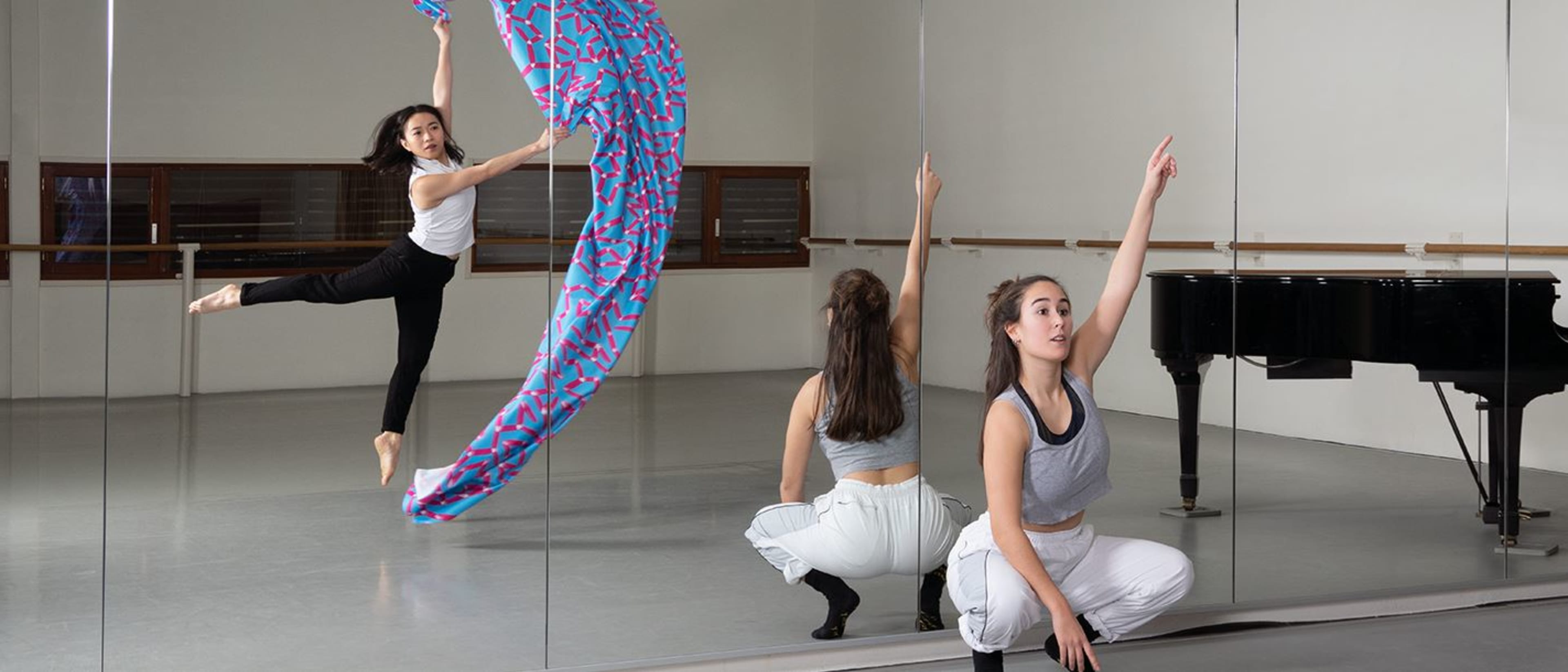
This part-time 2-year innovative Joint Degree Master Choreography is run jointly by Codarts University of the Arts in Rotterdam and Fontys Academy of the Arts in Tilburg. The program is designed to support experienced movement makers from a variety of fields while they carry out research into questions initiated from their current practice.


Bilborough College
A Level Dance
- Nottingham, United Kingdom
A-level
English
We follow the AQA specification at Bilborough Sixth Form College. You’ll be taught in a dedicated dance studio, with a sprung floor, mirrored walls, and portable sound and lighting equipment. Practical exams take place in our wonderfully equipped Theatre. It is desirable, but not essential, that you have dance experience – and you must show enthusiasm, passion and a willingness to experiment with different styles.
Best programs for you
Answer a few questions and we'll match you with programs!
Popular Performing Arts Programs Dance Notation degree types
Popular study format
Popular locations
Learn more about Dance Notation degree programs
Dance Notation degree programs immerse you in the art and science of documenting and communicating choreography. This unique discipline blends creativity with analytical skills, allowing you to capture dance movements through various notation systems.
Through courses in dance notation, you'll learn to interpret and notate choreography accurately, facilitating communication between choreographers, dancers, and researchers. You'll develop competencies in leading notation systems, such as Labanotation and Benesh Movement Notation, understanding their applications in notation and analysis. Students strengthen adaptability as they engage with new theoretical frameworks and practical scenarios.
In this field, you'll explore the historical and cultural contexts of dance, enhancing your analytical thinking and problem-solving skills. Degree outcomes often lead to diverse career paths, including roles as dance archivists, notation specialists, or educators. With a strong foundation in both theoretical and practical aspects, graduates contribute valuably to dance preservation and education globally.