Filters
Filters
- Europe
- Germany
- Natural Sciences Programs
- Applied Physics
Sort by
2 Applied Physics Degree Programs in Germany
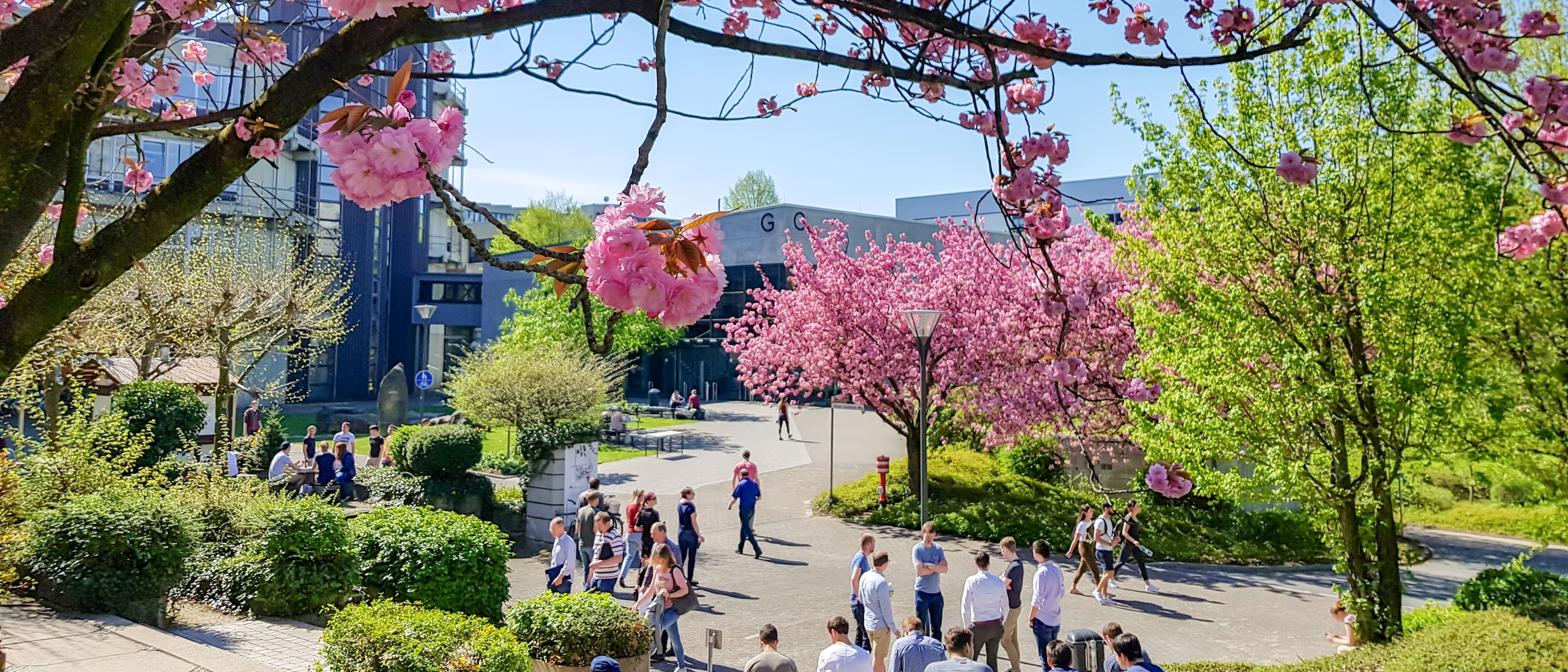

Paderborn University
MSc in Optoelectronics and Photonics
- Paderborn, Germany
MSc
Full time
4 semesters
On-Campus
English, German
In the Master's degree program in Optoelectronics and Photonics, the students acquire a profound knowledge base and skillset in the field of optoelectronics and photonics. The program is set up as an interdisciplinary course program with about equal parts of advanced level (Master level) courses from physics and electrical engineering and information technology.


International Max Planck Research School on Cellular Biophysics
PH.D. - International Max Planck Research School on Cellular Biophysics
- Frankfurt, Germany
- Mainz, Germany
PhD
Full time
3 years
On-Campus
English
The International Max Planck Research School (IMPRS) on Subcellular Architecture and Dynamics (IMPRS-CBP) is an international doctoral training program hosted by the Max Planck Institute of Biophysics, Goethe University Frankfurt, and Johannes Gutenberg University Mainz.
Best programs for you
Answer a few questions and we'll match you with programs!
Popular Natural Sciences Programs Applied Physics degree types
Popular study format
Learn more about Applied Physics degree programs in Germany
Studying Applied Physics opens doors to understanding complex systems and advancing technology. This discipline emphasizes practical applications, making it relevant for a wide range of industries, from renewable energy to nanotechnology.
Through courses in thermodynamics, fluid dynamics, and advanced materials, you'll learn to analyze and design experiments that address real-world challenges. Students develop skills in crafting models, programming simulations, and implementing experimental techniques, all essential for pushing boundaries in technology and science. In Germany, the focus on research and innovation encourages independent thought and exploration.
The educational approach often includes collaborative lab work, industry-linked projects, and rigorous theoretical studies, which build critical thinking and problem-solving abilities. Students strengthen adaptability as they engage with advanced concepts and hands-on experiences, preparing them for diverse career paths. Graduates find opportunities in engineering, research, and development roles, enhancing their expertise in a rapidly evolving global job market.