- MSc
- On-Campus
Master in Money and Finance
- duration
- 2 years
- languages
- English
- pace
- Full time
- Application Deadline
- 31 May 2027
- Earliest start date
- Oct 2027
- tuition fees
- EUR 4,700 / per year
Tuition fees apply to certain non-EU citizens.
At a glance
About: The Master in Money and Finance at The University of Ljubljana teaches monetary systems, central banking, inflation, currency change and public finance. It gives economics and quantitative tools via applied courses and research methods. Students can opt for a double-degree with University of Siena (Italy) or BI Norwegian Business School (Norway), spending one year at each and defending a thesis abroad. Keywords: monetary policy, financial markets, econometrics.
Career Outcomes: Graduates find roles in public finance, central banks and private firms: Financial economist, Quantitative analyst, Portfolio manager; other paths include risk manager, asset manager, policy analyst and investment banking roles.
We think of money as one of the biggest inventions of mankind. With the widespread use of money, finance was born. Nowadays all the economies are financial. Their financial systems have grown in their size and complexity. We see a wide array of financial institutions trading in complex financial assets on interdependent financial markets with a single aim of bringing together savers and investors in their desire to make the best use of their wealth.
The development of financial systems has thus become a close companion of general economic development. At the top of these financial systems are modern central banks with the difficult task of using money as a steering wheel between the dangers of inflation and recessions.
A good understanding of the mechanics of financial systems is of the essence. The aim of the master study program in Money and Finance is to provide such understanding to students whose ambitions are to as skilled as their peers in the international job market. Special care is devoted to giving the student a solid background knowledge of economics and quantitative tools. The growing complexity of financial markets in a globalized world is making such knowledge a necessity for good analytical skills.
Equipped with it our students will be allowed to master its use in a selection of applied courses that will be offered each year.
Which are the forces that cause money to change its value every second? How to control them or benefit from them? What are the reasons for inflation, deflation or hyperinflation? Why are currencies disappearing and new ones replacing them? How will the state cover its budget deficit and how will it fulfil its commitments to the European Union?
You will find the answers to these questions during your study in the Money and Finance programme.
We think of money as one of the biggest inventions of mankind. With the widespread use of money, finance was born. Nowadays all the economies are financial. Their financial systems have grown in their size and complexity. We see a wide array of financial institutions trading in complex financial assets on interdependent financial markets with a single aim of bringing together savers and investors in their desire to make the best use of their wealth. The development of financial systems has thus become a close companion of general economic development. At the top of these financial systems are modern central banks with the difficult task of using money as a steering wheel between the dangers of inflation and recessions. A good understanding of the mechanics of financial systems is of the essence. The aim of the MSc in Money and Finance at SEB LU is to provide such understanding to students whose ambitions are to as skilled as their peers in the international job market. Special care is devoted to giving the student a solid background knowledge of economics and quantitative tools. The growing complexity of financial markets in a globalized world is making such knowledge a necessity for good analytical skills. Equipped with it our students will be allowed to master its use in a selection of applied courses that will be offered each year.
Double degree
Students enrolled in a Master's programme, specialising in Money and Finance, have a possibility (first year, first semester) to opt for a Double Degree programme and spend a part of their studies at a partner institution based on a valid agreement/tender. Number of places is limited.
SEB LU is currently offering double degree (for specialization in Money and Finance) with the following partner institution(s):
- University of Siena (Italy)
- BI Norwegian Business School (Norway)
Normally Double degree programme includes spending one year at SEB LU and one year at the partner institution. After successful completion of all programme requirements student receives a master's degree from SEB LU as well as a degree from the partner institution.
Organisations/institutions/companies with employment prospects
Employment is possible in companies and institutions requiring a financial economist in the general government sector (ministries, agencies, central bank) and private companies dealing in money and finances.
The Money and Finance programme is a double-degree study, offering the possibility to obtain a degree at one of our partner schools abroad. When a student completes their first year of study at the School of Economics and Business they can continue studying abroad and also defend their master’s thesis there. Ambitious students who are keen on additional research gain a proper basis for enrolment in doctoral studies.
First-year enrolment is open to:
- Graduates of first-level programs in relevant study programs with at least 180 ECTS, or those that have completed the current program of study for a qualification in relevant study programs;
- Graduates of equivalent courses listed in the previous paragraph in unrelated areas of study must complete additional academic requirements of 12 ECTS: Microeconomics 1 (6 ECTS) and Introduction to Business (6 ECTS).
By Article 41 of the Law of Higher Education, candidates are ranked in cases where the number of available spots is limited. Candidates are ranked based on their undergraduate GPA (70%) and the exam results of Type 2 and Type 3 undergraduate elective courses (30%).
1st year
- Microeconomics 3
- Advanced Macroeconomics
- Optimization methods in economics
- Financial Economics
- Econometrics 2
- Public Finance 2
- Economic Policies of the EU
- Elective Course
- Skills Development 1
2nd year
- Monetary Economics 2
- Risk Management
- * Taxes and Tax Harmonisation in the EU
- ** Empirical Asset Pricing
- ** International Finance 2
- Master’s Thesis Proposal
- Elective Course
- Skills Development 2
- Master's Thesis
*student selects one of the two offered obligatory courses type 11.
**Student selects one of the two offered obligatory courses type 11.
Knowledge and skills acquired by taking this program
In addition to topical subjects related to monetary policy, investments, as well as public and international finance, the program gives students knowledge about analytical tools and theoretical models. All of the above provides a solid basis for decision-making as is expected from the financial economist profile gained through this study.
The course fee is € 4,700.00 per academic year. (In full before enrolment)
Tuition fee is paid by:
a) Slovenian citizens and citizens of EU Member States or countries with which Slovenia has a bilateral agreement (reciprocity principle) pay tuition fees for full-time studies:
- if they have already obtained at least the equivalent level of education,
- if, when they change their program of study, they enroll in the same or a lower year of study and have previously benefited from the right to repeat a year or to change their program of study at the same level of study,
- if they re-enroll in the same program or course of study from which they have previously withdrawn.
b) Foreign citizens pay tuition fees for full-time studies:
- if they come from non-EU countries or countries with which Slovenia has not signed a bilateral agreement (reciprocity principle),
- if they have not completed secondary education in Slovenia and passed the General Matura exam (GM) by the Law on Higher Education (ZViS),
- if they do not have permanent residence in the Republic of Slovenia and are not themselves or at least one of their parents or guardians resident in the Republic of Slovenia for tax purposes by the time the selection procedure starts.
The paid tuition fee for full-time studies is valid for one academic year. Students who regularly advance to a higher academic year have the right to study and complete their studies under the conditions, including tuition fees, applicable at the time of admission.
 EFMD Equis Accredited
AMBA Accredited
AACSB Accredited
Professions
- Financial economist
- Quantitative analyst
- Portfolio manager
Join the University of Ljubljana’s information days and Q&A sessions throughout February and March and explore the opportunities waiting for you at our university.
- University of Ljubljana online info sessions 18 and 19 February 2026 – REGISTRATION (https://forms.office.com/e/saApMgeFsx)
- Q & A session for undergraduate studies 5 March 2026 – REGISTRATION (https://forms.office.com/e/6QgaGaHqCY)
Every new academic year offers new opportunities for academic and personal growth, and we are looking forward to encouraging you along this exciting journey of learning and discovery. We are happy to welcome you to this information package of our degree programs and hope you find something of your interest.
Choosing your studies is one of the most important decisions of your life. We suggest you think carefully about what you like, as it makes studying much easier. Visit our websites and social networks of the faculties you are interested in, learn all there is to know when choosing to study at our University, and prepare your questions. If you need any advice or help, do not hesitate to contact us. We will do our best to provide you with all the information and answers to any questions you may have.
Most of our members (academies and faculties) are located in Ljubljana, the capital of Slovenia, except our Faculty of Maritime Studies and Transport which is located in Portorož by the Adriatic Sea.
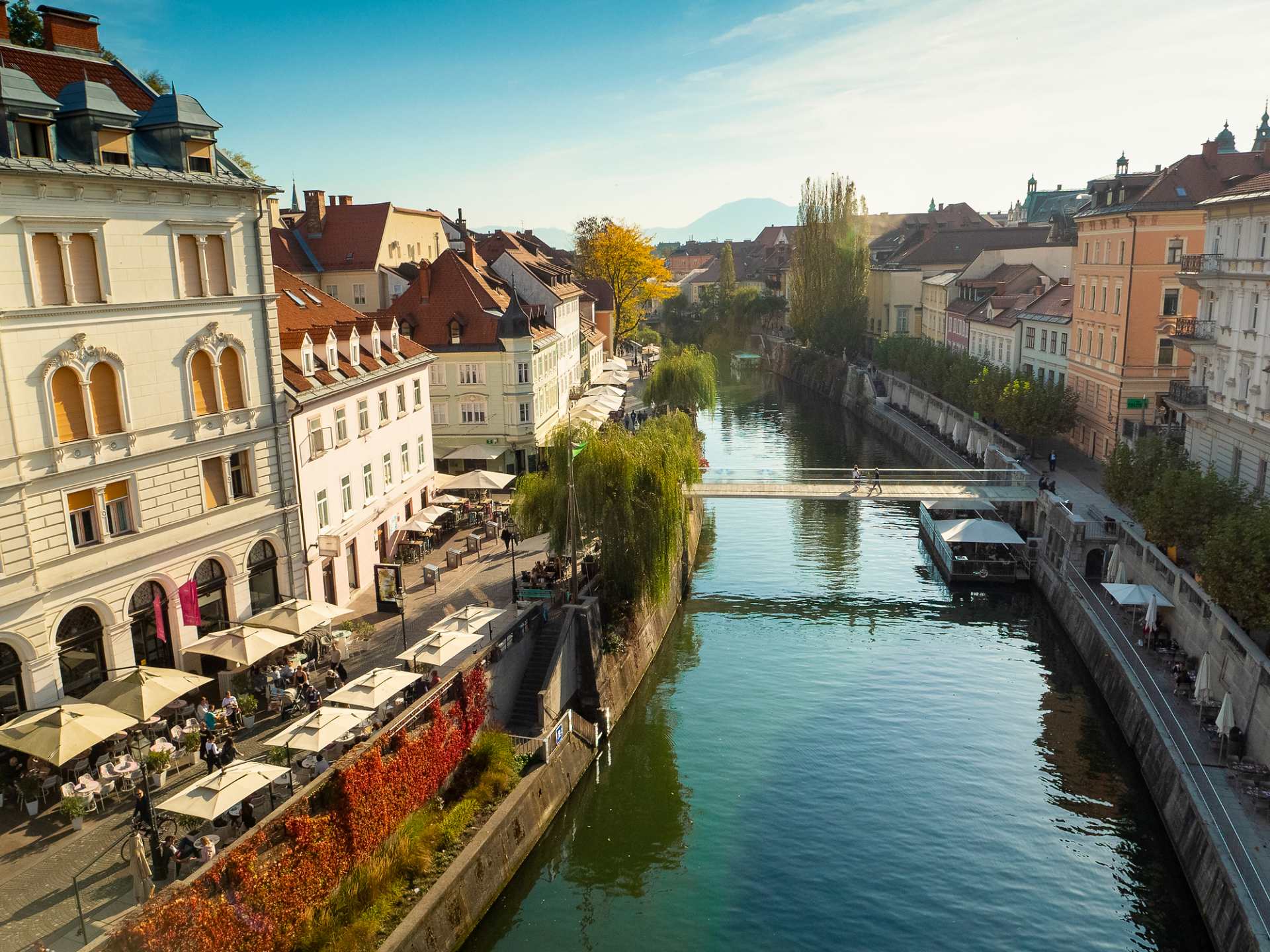
Ljubljana is a very pleasant and youthful city to live in. We have many museums, galleries, theatres, cinemas, institutes, libraries, and one of the oldest philharmonic orchestras in the world. In the city center, you will find lots of pubs, restaurants, clubs, and shops. There are plenty of green spaces too. Kongresni trg (square) is one of the central squares in Ljubljana which is also the seat of the Rectorate of the University of Ljubljana.
Our degree programs range across all fields of study: Art, Fine Arts, Natural Science, Technology and Engineering, Social Sciences, Humanities, Medicine, Health Sciences, and Sport, which are designed in line with the Bologna Process guidelines. Within the University of Ljubljana and in cooperation with foreign universities, we provide joint, interdisciplinary, and multidisciplinary study programs in all three cycles. In addition to lectures, tutorials, and seminars, we place great emphasis on practical training, the inclusion of students in project work, international exchanges, career guidance, and extracurricular and other activities.
As our student, you will have a great opportunity to study in the diverse international community with many visiting professors and international students from all over the world. Each year around 40.000 students upgrade and develop their knowledge and skills at our institution, among them, we have 8%, are international students. The University of Ljubljana programs are completed by more than half of all bachelor graduates in Slovenia, more than two-thirds of master’s and specialization degree holders, and more than 80 percent of doctors of science.
Our commitment to academic excellence and diversity of activities is confirmed by the international university rankings and many other national and international recognition of the study and research achievements of our academic and research community.
A particular concern of the University of Ljubljana is the transfer of knowledge to the industry, for the safety of the environment, people’s health, the quality of life, and the wealthy economy, which is why we cooperate closely with many Slovenian and foreign companies. Our partners are prominent multinational corporations and top Slovenian organizations.

University of Ljubljana
University of Ljubljana Kongresni trg 12, 1000, Ljubljana