

MSc in Applied Mathematics
Siena, Italy
MSc
DURATION
2 years
LANGUAGES
English
PACE
Full time
APPLICATION DEADLINE
EARLIEST START DATE
TUITION FEES

STUDY FORMAT
On-Campus
* the amount for each international student is based on the student’s country of origin and the course chosen
Key Summary
About: The MSc in Applied Mathematics at The University of Siena covers core mathematics (logic, algebra, geometry, analysis) and applied fields (numerical analysis, statistics, mathematical modeling, optimization). The programme trains you to apply advanced mathematical methods, use scientific literature, and collaborate with computer science, engineering, economics and experimental sciences for research and problem solving.
Career Outcomes: Graduates access roles as mathematicians, statistical technicians, computer specialists, data analysts, and financial management technicians. You'll be prepared for research and development in engineering, economics, biology and social sciences, for teaching after ministerial courses, or for PhD study. Internships and exchanges support practical experience.
The program provides courses which complete the basic mathematical competences, covering all the main areas of Mathematics. Then, the student has a choice of courses focused in areas where the support of advanced mathematical methods is fundamental for recent scientific researches and developing technologies.
Overview
The Master’s degree program in Applied Mathematics prepares graduates with a solid foundation in Mathematics, covering both theoretical aspects (such as Logic, Algebra, Geometry, and Analysis) and applied areas (including Numerical Analysis, Statistics, Mathematical Modeling, and Optimization techniques). This comprehensive preparation equips students with the skills needed for both academic research and the ability to formalize and analyze problems from applied sciences and technologies using advanced mathematical methodologies.
Objectives
The Master’s degree program in Applied Mathematics aims to train specialists capable of analyzing problems within Mathematics and across related disciplines. Graduates will learn to identify appropriate mathematical tools, leveraging scientific literature, to formalize and solve these problems effectively. They will also be equipped to collaborate with researchers from diverse fields such as Computer Science, Engineering, Economics, and Experimental Sciences.
The program integrates substantial coursework in scientific and technological disciplines to enhance students’ ability to comprehend and engage with the language and methodologies of related fields. This interdisciplinary focus fosters collaboration and equips graduates to excel in both research and professional settings.
The program is structured into two specialised curricula:
- Mathematical Methodologies
- Mathematical Models
Each curriculum is designed to provide targeted expertise, enabling students to develop skills tailored to specific areas of application or research.
Graduates of the program will possess a robust combination of theoretical knowledge and practical skills, enabling them to contribute to solving complex problems across various domains. They will be well-prepared for careers in manufacturing, administration, and research or to pursue further education through doctoral or postgraduate programs in Mathematics or disciplines reliant on mathematical modeling.
Teaching
The degree program in Applied Mathematics at the University of Siena offers a diverse and rigorous curriculum that blends theoretical knowledge with practical application, preparing students for academic research and professional careers.
Theoretical Foundations
During the first year, students build on their advanced mathematical training by delving deeper into key areas such as Logic, Algebra, Geometry, and Analysis. These courses provide a profound understanding of fundamental mathematical concepts and their potential applications.
Practical Applications
The program emphasizes real-world applications of mathematics. Students gain hands-on experience through courses on numerical methods, optimization, and computational techniques. These courses develop the skills needed to address complex problems in scientific and technological contexts.
Students apply mathematical principles to areas such as data analysis, engineering, economics, biology, and scientific research. This interdisciplinary approach fosters creativity, innovation, and the ability to tackle diverse challenges, ensuring graduates are prepared for a wide range of career opportunities.
Several scholarship options are available, please visit the university website for information.
Internship and International Opportunities
The Department of Information Engineering and Mathematics has an extensive history of collaboration at both academic and industrial levels. These partnerships offer students the opportunity to spend a semester at prestigious universities and research institutions through student exchange programs or to undertake internships at companies or research labs specializing in complex system modeling and data analysis.
Career Opportunities
Graduates in Applied Mathematics possess the ability to mathematically formalize problems described in natural language and leverage this formalization to analyze issues not only within Mathematics itself but also in related disciplines. They are skilled in collaborating with experts in other fields to effectively apply advanced mathematical tools in practical contexts.
As a result, graduates are well-equipped to enter the job market in roles such as mathematicians, statistical technicians, computer specialists, information processing and transfer experts, or financial management technicians.
Key career opportunities include:
- Research and experimental development in engineering, economics, biology, and social sciences.
- Teaching Mathematics, following completion of the required ministerial courses.
- Advanced research in Mathematics, with the option to pursue a PhD.
- Positions in organizations and companies that focus on data analysis, modeling, or the optimization of complex systems.
Why Studying in Siena?
The University of Siena, located in the historic city of Siena in Italy, is an attractive choice for higher education for various reasons.
Tradition and Prestige: Established in 1240, the University of Siena is one of the oldest universities in Italy and Europe. It has a rich history and a longstanding reputation for academic excellence.
Diverse Course Offerings: The University of Siena offers a wide range of undergraduate, graduate, and postgraduate programs in various disciplines, including humanities, sciences, medicine, engineering, economics and social sciences. This allows students to pursue their interests and career goals.
International Environment: The University of Siena attracts students from all around the world, creating a diverse and multicultural learning environment. This exposure to different perspectives and cultures can be highly enriching for students.
Quality of Life: Siena is known for its relaxed lifestyle, friendly locals, and delicious cuisine. The city’s manageable size and welcoming atmosphere make it an ideal location for students looking to balance their studies with a vibrant social life.
Research Impact: The University of Siena’s research output is recognised globally, with its faculty and researchers contributing to significant advancements in various fields. The university’s research publications and citations in international journals reflect its commitment to high-quality research and global impact.
Research Opportunities: The University of Siena has strong research programs and collaborations with other institutions, both in Italy and internationally. This can provide students with valuable opportunities for research and professional development.
Affordability: Compared to universities in some other countries, tuition fees at the University of Siena are relatively affordable. Additionally, the cost of living in Siena is generally lower than in larger Italian cities like Rome or Milan.
Exchange Programs: The University of Siena participates in several international exchange programs, such as the Erasmus+ program, which allows students to study abroad for a semester or academic year, providing valuable international experience.
Career Prospects: Graduates from the University of Siena have a strong record of finding employment or continuing their education, both within Italy and internationally. The university’s reputation and connections can help students access opportunities in their chosen fields.
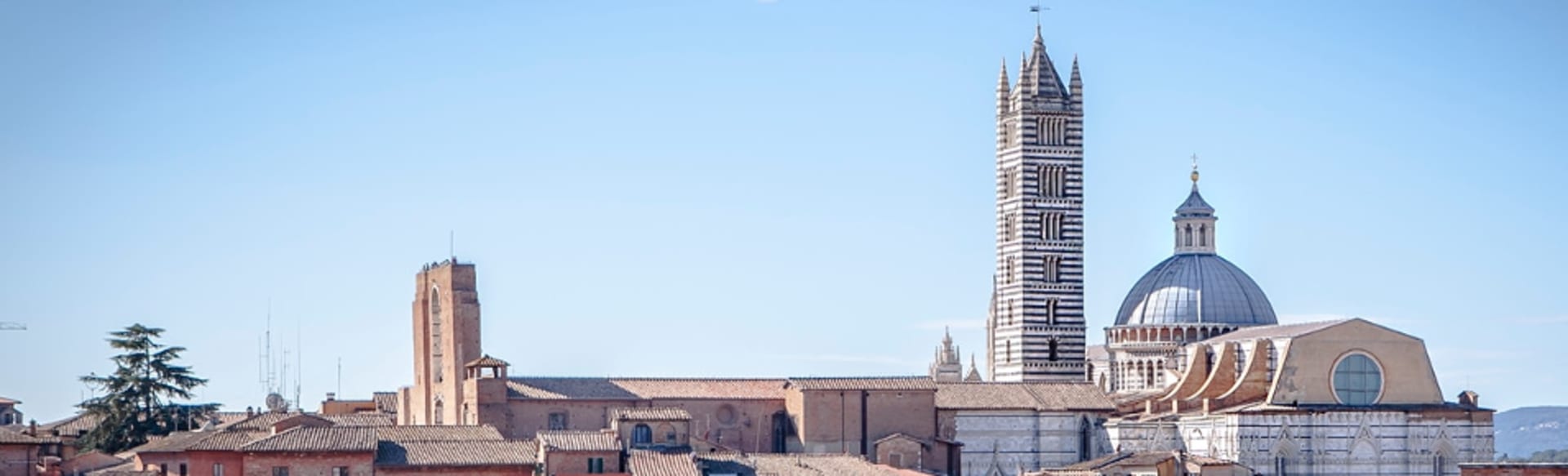
Beautiful Location: Siena is a picturesque city with a rich history and stunning architecture. The city’s medieval cityscape and scenic countryside provide a unique and inspiring setting for studying.
Language and Cultural Immersion: Studying in Siena offers the opportunity to learn or improve Italian language skills, as well as gain a deep understanding of Italian culture and history.
Studying Abroad
International students enrolled at the University of Siena can participate in several international exchange programs, such as the Erasmus+ program, which allows our students to study abroad for a semester or one academic year, providing valuable international experience.
Our International programs allow students of the University of Siena to spend a study period (from 2 to 12 months) at one of the other 500 partner universities worldwide.
It is possible to carry out the mobility during each study cycle (bachelor, master of PhD), attend courses and sit exams, prepare thesis work and carry out internship activities. Participants in the International mobility programs will get full recognition for the credits obtained abroad.
In addition to in-presence teaching, which continues to be the preferred method also in the next Academic Year, every single lesson will be simultaneously live-streamed and/or video-recorded and uploaded on our digital platform for subsequent viewing. This mode is essential for students who are temporarily unable to be on-premises.