

MA in Public and Cultural Diplomacy
Siena, Italy
MA
DURATION
2 years
LANGUAGES
English
PACE
Full time
APPLICATION DEADLINE
EARLIEST START DATE
TUITION FEES

STUDY FORMAT
On-Campus
* the amount for each international student is based on the student’s country of origin and the course chosen
Key Summary
About: The MA in Public and Cultural Diplomacy at The University of Siena focuses on intercultural negotiation and on building institutions and cultural policies at an international level. The programme develops skills in public and cultural diplomacy, international cooperation and cultural heritage promotion. It addresses professionals from political institutions, public administrations, NGOs, new media, interest groups, associations and the third sector. A double-degree option is available and the curriculum uses a multidisciplinary approach combining policy design, institutional analysis, intercultural dialogue, mediation and cultural communication.
Career Outcomes: Graduates can work in public diplomacy, cultural policy, NGOs, international organisations and cultural institutions.
At the center of the program are two themes: the role of intercultural negotiation and the construction of institutions and cultural policies at an international level.
Double Degree option: Jagiellonian University Krakow (Poland)
The Master’s Degree Programme in Public and Cultural Diplomacy aims to develop expertise and professional skills in international cooperation, with a focus on the emerging field of public and cultural diplomacy. This rapidly growing area attracts a wide range of professionals, not only from political institutions and public administrations but also from global governance actors such as non-governmental organizations (NGOs), new media, interest groups, associations, and the third sector. In this context, the programme emphasises two key dimensions: the practices of public and cultural diplomacy in international relations and the international approach to designing policies and institutions for preserving, enhancing, and promoting cultural heritage.
The programme is structured as follows:
First Year
The first year provides advanced knowledge in socio-political studies, with a particular emphasis on comparative politics in non-European contexts and international relations. Core courses in political science cover essential topics and approaches to understanding public and cultural diplomacy within extra-European political systems. Additional courses focus on socio-economic sustainability and human rights across diverse global regions. These are supported by subjects such as international law, geography, Christian and medieval archaeology, anthropology, the history of political institutions, and economic policy. The programme also offers short courses in data analysis and report writing to familiarise students with practical tasks typically required by hosting institutions during their traineeships.
Second Year
The second year focuses on applied knowledge for interpreting the contemporary world through historical, social, political, and legal perspectives. Particular attention is given to interactions between the West and other regions, the role of international organizations, and the influence of traditional and new media. Courses include international history and humanities as well as subjects such as palaeography, ancient topography, and religious diplomacy. Advanced training in cultural diplomacy is complemented by courses in social sciences and communication, the history of international relations, and linguistics.
Interdisciplinary and Intercultural Focus
The programme emphasises its interdisciplinary and intercultural dimensions. The use of English as the medium of instruction facilitates immediate intercultural exchange and removes language barriers, preparing graduates for international careers or roles requiring collaboration with institutions and actors from diverse cultural backgrounds.
Global Scope
The programme integrates robust training in social, historical, legal, and humanities disciplines, unified by a focus on institutional and cultural contexts that characterise dynamic political and social realities. It explores regions such as the Mediterranean, the Middle East, China, East Asia, Africa, and Latin America. Methodological competencies converge on key topics relevant to globalization, multiculturalism, international politics, human rights, crisis areas, cultural pluralism, and the role of soft power in international dialogues.
The skills acquired align with the goals of governments and organizations promoting sustainable socio-cultural development. These include the dissemination of best administrative practices, conflict resolution, and the reorganisation of civil society in crisis areas. The programme thus equips graduates with the expertise needed to contribute to socio-cultural progress and global governance initiatives.
Several scholarship options are available, please visit the university website for information.
This innovative programme adopts a multidisciplinary approach through its diverse course offerings, international partnerships, and organisational training opportunities. Most of the classes are specifically designed for this programme, addressing the evolving roles of public diplomacy. These roles include international cooperation, global cultural promotion and planning, social communication in cultural affairs, expertise in conflict resolution, cultural policy development, international facilitation and mediation, and scientific journalism.
Why Studying in Siena?
The University of Siena, located in the historic city of Siena in Italy, is an attractive choice for higher education for various reasons.
Tradition and Prestige: Established in 1240, the University of Siena is one of the oldest universities in Italy and Europe. It has a rich history and a longstanding reputation for academic excellence.
Diverse Course Offerings: The University of Siena offers a wide range of undergraduate, graduate, and postgraduate programs in various disciplines, including humanities, sciences, medicine, engineering, economics and social sciences. This allows students to pursue their interests and career goals.
International Environment: The University of Siena attracts students from all around the world, creating a diverse and multicultural learning environment. This exposure to different perspectives and cultures can be highly enriching for students.
Quality of Life: Siena is known for its relaxed lifestyle, friendly locals, and delicious cuisine. The city’s manageable size and welcoming atmosphere make it an ideal location for students looking to balance their studies with a vibrant social life.
Research Impact: The University of Siena’s research output is recognised globally, with its faculty and researchers contributing to significant advancements in various fields. The university’s research publications and citations in international journals reflect its commitment to high-quality research and global impact.
Research Opportunities: The University of Siena has strong research programs and collaborations with other institutions, both in Italy and internationally. This can provide students with valuable opportunities for research and professional development.
Affordability: Compared to universities in some other countries, tuition fees at the University of Siena are relatively affordable. Additionally, the cost of living in Siena is generally lower than in larger Italian cities like Rome or Milan.
Exchange Programs: The University of Siena participates in several international exchange programs, such as the Erasmus+ program, which allows students to study abroad for a semester or academic year, providing valuable international experience.
Career Prospects: Graduates from the University of Siena have a strong record of finding employment or continuing their education, both within Italy and internationally. The university’s reputation and connections can help students access opportunities in their chosen fields.
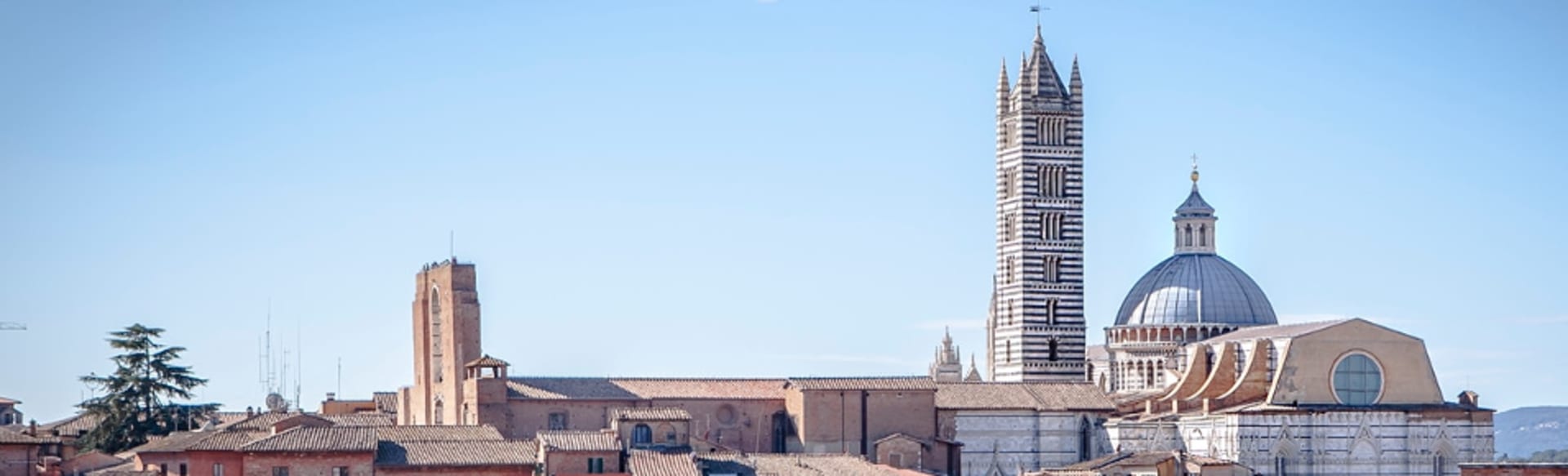
Beautiful Location: Siena is a picturesque city with a rich history and stunning architecture. The city’s medieval cityscape and scenic countryside provide a unique and inspiring setting for studying.
Language and Cultural Immersion: Studying in Siena offers the opportunity to learn or improve Italian language skills, as well as gain a deep understanding of Italian culture and history.
Studying Abroad
International students enrolled at the University of Siena can participate in several international exchange programs, such as the Erasmus+ program, which allows our students to study abroad for a semester or one academic year, providing valuable international experience.
Our International programs allow students of the University of Siena to spend a study period (from 2 to 12 months) at one of the other 500 partner universities worldwide.
It is possible to carry out the mobility during each study cycle (bachelor, master of PhD), attend courses and sit exams, prepare thesis work and carry out internship activities. Participants in the International mobility programs will get full recognition for the credits obtained abroad.