

Bachelor in Physiotherapy
Siena, Italy
Bachelor's degree
DURATION
3 years
LANGUAGES
Italian
PACE
Full time
APPLICATION DEADLINE
EARLIEST START DATE
TUITION FEES

STUDY FORMAT
On-Campus
Key Summary
About: The Bachelor’s Degree in Physiotherapy (Health Professions in Rehabilitation, SNT/02) at The University of Siena qualifies graduates to practice as physiotherapists. Recognized under Italian law, graduates must register with the board. They assess function and provide prevention, treatment and rehabilitation using instrumental, manual, cognitive and psychomotor therapies; design rehabilitation programmes; recommend prostheses and aids. Keywords: physical therapy, rehabilitation.
Career Outcomes: Graduates work as physiotherapists in hospitals, National Health Service settings, rehabilitation centres, private practice, nursing homes, spas, outpatient clinics, sports clubs, cooperatives and NGOs. They can teach, consult or continue with a Master’s in Rehabilitation Sciences or first‑level Masters.
Bachelor’s Degree in Physiotherapy (Class of Health Professions in Rehabilitation, SNT/02) qualifies graduates to practice as Physiotherapists.
Graduates of this degree program, pursuant to Article 6, paragraph 3, of Legislative Decree no. 502 of December 30, 1992 and subsequent amendments, Law no. 42 of February 26, 1999, and Law no. 251 of August 10, 2000, are recognised health professionals. Their specific scope of activity and responsibility is defined by ministerial decrees establishing professional profiles and curricula of university and post-graduate training programs, as well as by their professional codes of ethics. To practice as a physiotherapist, registration with the relevant Professional Board is required.
Graduates in Physiotherapy independently, or in collaboration with other professionals, perform functional assessments and activities aimed at prevention, treatment, and rehabilitation. They employ instrumental, manual, cognitive, and psychomotor therapies to address health problems of individuals and/or the community.
Physiotherapists also design rehabilitation programs, often within a multidisciplinary team, to meet the needs of people with disabilities; they recommend prostheses and aids, train patients in their use, and verify their effectiveness. These activities are aimed at the functional recovery and rehabilitation of motor, higher cortical, and visceral functions impaired by pathological events of various congenital or acquired causes. They also assess whether the rehabilitation methodology used is consistent with the functional recovery goals.
The program consists of 180 ECTS credits over three years, including:
- 95 ECTS in classroom and theoretical/practical teaching,
- 61 ECTS (approx. 1,600 hours) in clinical and professional training (internships),
- 24 ECTS in other activities related to the profession (electives, optional modules, foreign language, thesis preparation, etc.).
The curriculum begins with core disciplines that provide a solid foundation in the integrated biological functions of human organs and systems, as well as in basic statistics for analyzing phenomena regulating individual and social life, and in emergency and first aid concepts, all of which prepare students for more advanced professional subjects.
The specific and professional training in Physiotherapy enables students to acquire knowledge of the etiology and pathophysiology of the main conditions associated with motor and psychomotor disabilities, with particular focus on musculoskeletal, cardiorespiratory, and central and peripheral nervous system disorders, both in adults and in children.
The program emphasizes the learning of concepts, methods, and physiotherapeutic techniques for the prevention, treatment, and rehabilitation of motor, psychomotor, and cognitive dysfunctions, as well as for improving individual performance in daily life contexts. In addition, students acquire managerial and rehabilitation management skills necessary for their professional and career development, both in public and private healthcare sectors.
Several scholarship options are available, please visit the university website for information.
Physiotherapist
Role in a work context
Graduates in Physiotherapy carry out, with full professional responsibility and autonomy, activities aimed at prevention, treatment, rehabilitation, and functional assessment for individuals and the community. They are healthcare professionals responsible for the duties established by the Ministerial Decree of the Ministry of Health, September 14, 1994, no. 741, and subsequent amendments.
Within the scope of their competencies, and independently or in collaboration with other healthcare professionals, they perform their activities in relation to the physician’s diagnosis and prescriptions, in the areas of motor function, higher cortical functions, and visceral functions affected by pathological events.
Skills associated with the role
Graduates in Physiotherapy:
- Design rehabilitation programs, also within a multidisciplinary team, to identify and meet the health needs of people with disabilities;
- Independently perform therapeutic activities for the functional recovery of motor, psychomotor, and cognitive disabilities, using instrumental, manual, therapeutic exercise, and occupational therapies;
- Recommend the use of prostheses and aids, train patients in their use, and verify their effectiveness;
- Assess the consistency between the rehabilitation methods used and the functional recovery objectives;
- Carry out study, teaching, and professional consulting activities within healthcare services and other contexts requiring their professional expertise.
Career opportunities
Physiotherapists can work within the National Health Service, in accredited and contracted private facilities, rehabilitation centres, private practices, nursing homes, thermal spas, medical and/or multi-speciality outpatient clinics, sports associations and clubs, service cooperatives, non-governmental organisations, and public or private prevention services.
The training provided by the Degree Program in Physiotherapy enables graduates to quickly enter the job market, as well as to continue their studies by enrolling in the Master’s Degree in Rehabilitation Sciences of Health Professions or in first-level university Master’s programs.
Why Studying in Siena?
The University of Siena, located in the historic city of Siena in Italy, is an attractive choice for higher education for various reasons.
Tradition and Prestige: Established in 1240, the University of Siena is one of the oldest universities in Italy and Europe. It has a rich history and a longstanding reputation for academic excellence.
Diverse Course Offerings: The University of Siena offers a wide range of undergraduate, graduate, and postgraduate programs in various disciplines, including humanities, sciences, medicine, engineering, economics and social sciences. This allows students to pursue their interests and career goals.
International Environment: The University of Siena attracts students from all around the world, creating a diverse and multicultural learning environment. This exposure to different perspectives and cultures can be highly enriching for students.
Quality of Life: Siena is known for its relaxed lifestyle, friendly locals, and delicious cuisine. The city’s manageable size and welcoming atmosphere make it an ideal location for students looking to balance their studies with a vibrant social life.
Research Impact: The University of Siena’s research output is recognised globally, with its faculty and researchers contributing to significant advancements in various fields. The university’s research publications and citations in international journals reflect its commitment to high-quality research and global impact.
Research Opportunities: The University of Siena has strong research programs and collaborations with other institutions, both in Italy and internationally. This can provide students with valuable opportunities for research and professional development.
Affordability: Compared to universities in some other countries, tuition fees at the University of Siena are relatively affordable. Additionally, the cost of living in Siena is generally lower than in larger Italian cities like Rome or Milan.
Exchange Programs: The University of Siena participates in several international exchange programs, such as the Erasmus+ program, which allows students to study abroad for a semester or academic year, providing valuable international experience.
Career Prospects: Graduates from the University of Siena have a strong record of finding employment or continuing their education, both within Italy and internationally. The university’s reputation and connections can help students access opportunities in their chosen fields.
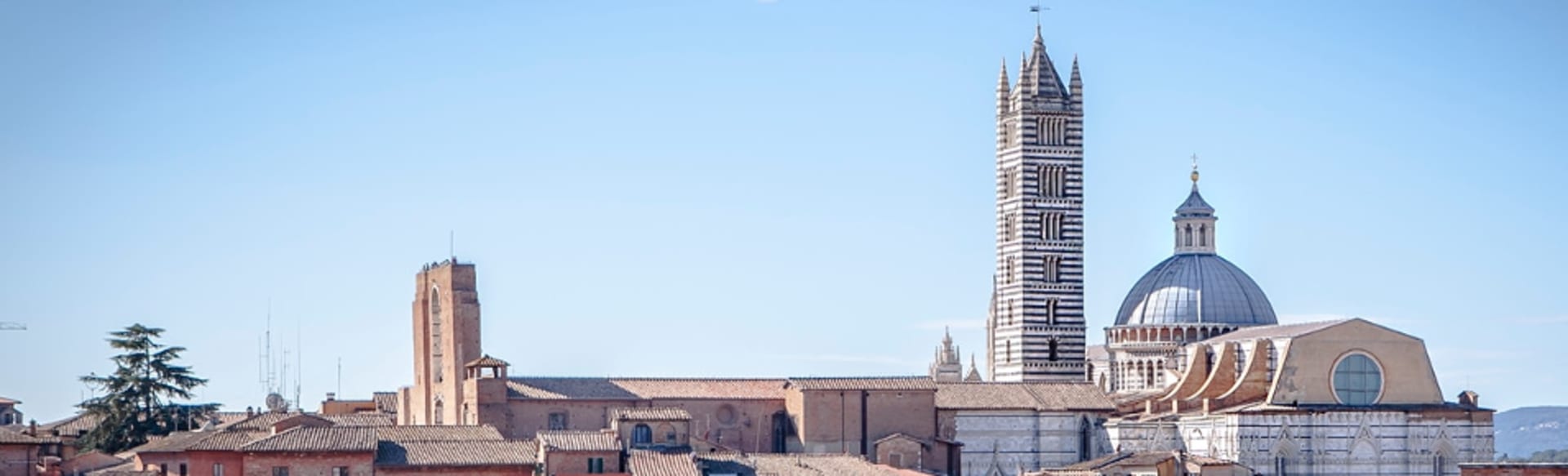
Beautiful Location: Siena is a picturesque city with a rich history and stunning architecture. The city’s medieval cityscape and scenic countryside provide a unique and inspiring setting for studying.
Language and Cultural Immersion: Studying in Siena offers the opportunity to learn or improve Italian language skills, as well as gain a deep understanding of Italian culture and history.
Studying Abroad
International students enrolled at the University of Siena can participate in several international exchange programs, such as the Erasmus+ program, which allows our students to study abroad for a semester or one academic year, providing valuable international experience.
Our International programs allow students of the University of Siena to spend a study period (from 2 to 12 months) at one of the other 500 partner universities worldwide.
It is possible to carry out the mobility during each study cycle (bachelor, master of PhD), attend courses and sit exams, prepare thesis work and carry out internship activities. Participants in the International mobility programs will get full recognition for the credits obtained abroad.
In addition to in-presence teaching, which continues to be the preferred method also in the next Academic Year, every single lesson will be simultaneously live-streamed and/or video recorded and uploaded on our digital platform for subsequent viewing. This mode is essential for students who are temporarily unable to be on premises.