

Bachelor in Dietetics
Siena, Italy
Bachelor's degree
DURATION
3 years
LANGUAGES
Italian
PACE
Full time
APPLICATION DEADLINE
EARLIEST START DATE
TUITION FEES

STUDY FORMAT
On-Campus
Key Summary
About: The Bachelor in Dietetics trains healthcare professionals in nutrition, public health and dietetics. The program awards 180 ECTS over three years, including 60 ECTS of supervised internships. Core subjects include biochemistry, anatomy, physiology, microbiology, pathology, psychology, statistics, and clinical nutrition including oncology patients.
Career Outcomes: Graduates qualify as dietitians responsible for assessing nutritional needs, planning therapeutic diets, educating patients and communities, and collaborating in multidisciplinary care. They can work in the National Health Service, private clinics, rehabilitation centers, nursing homes, school and corporate catering, research and diagnostics, spas, sports organizations, or practice privately as consultants and food service coordinators.
The Graduate with a Bachelor’s Degree in Dietetics is a professional in the technical-assistance area of healthcare and, in this context, occupies an essential role in ensuring the well-being of individuals and a good quality of life, as they:
- Contribute to the recovery of health by providing appropriate nutritional support for both medical and surgical therapies;
- Help maintain the health of healthy individuals through the promotion of correct eating habits;
- Play a role in prevention by recommending “best practices” in nutrition.
The program requires a total of 180 ECTS credits over three years of study, of which 60 must be earned through training activities aimed at developing specific professional skills (internship). Theoretical and theoretical/practical learning, focused on the specifics of the profession, includes foundational subjects such as physics, biology, chemistry, biochemistry, anatomy, histology, physiology, general pathology, microbiology, psychology, computer science, and statistics.
Subsequently, students progress to more specialised courses, including metabolic biochemistry, medical genetics, clinical microbiology, and, finally, nutrition in clinical-specialist contexts identified by groups of individuals and pathologies — including nutrition for oncology patients.
Several scholarship options are available, please visit the university website for information.
Dietitian
Role in a work context
The professional profile of the dietitian is defined as follows: the dietitian is a healthcare professional responsible for all activities related to the correct application of nutrition and dietetics, including educational aspects and collaboration in the implementation of food policies, in compliance with current regulations.
Competencies associated with the role
The specific competencies include:
- organising and coordinating specific activities related to nutrition in general and dietetics in particular;
- collaborating with authorities responsible for safeguarding the hygienic and sanitary aspects of food services;
- developing, formulating, and implementing diets prescribed by physicians and monitoring their acceptability by patients;
- collaborating with other professionals in the multidisciplinary treatment of eating disorders;
- studying and defining the composition of food rations to meet the nutritional needs of population groups, and planning the organisation of food services for both healthy and ill communities;
- carrying out educational and informational activities aimed at disseminating principles of proper nutrition to support the recovery and maintenance of good health in individuals, communities, and population groups.
Career opportunities
In addition to the National Health Service (NHS), dietitians may work in private facilities affiliated with the NHS, both for diagnostics and research, as well as in accredited or non-accredited institutions such as clinics, rehabilitation centers, nursing homes, spas and wellness centers, medical and/or specialist practices, school and corporate cafeterias, and more.
Within the NHS, the demand for this profession is expected to grow in relation to major health issues highlighted by the WHO, such as cardiovascular diseases, nutrition- and lifestyle-related conditions, overweight, and obesity, for which the dietitian plays a central role in prevention and rehabilitation.
Current regulations also allow for self-employed practice, either individually or in associated professional practices, in sports organisations of various types, service cooperatives, and more.
The profession of dietitian is included under code 85.14.2 (Independent professional activities) of the Ateco classification of economic activities: healthcare services not provided by hospitals or physicians, but by legally recognized professionals.
Why Studying in Siena?
The University of Siena, located in the historic city of Siena in Italy, is an attractive choice for higher education for various reasons.
Tradition and Prestige: Established in 1240, the University of Siena is one of the oldest universities in Italy and Europe. It has a rich history and a longstanding reputation for academic excellence.
Diverse Course Offerings: The University of Siena offers a wide range of undergraduate, graduate, and postgraduate programs in various disciplines, including humanities, sciences, medicine, engineering, economics and social sciences. This allows students to pursue their interests and career goals.
International Environment: The University of Siena attracts students from all around the world, creating a diverse and multicultural learning environment. This exposure to different perspectives and cultures can be highly enriching for students.
Quality of Life: Siena is known for its relaxed lifestyle, friendly locals, and delicious cuisine. The city’s manageable size and welcoming atmosphere make it an ideal location for students looking to balance their studies with a vibrant social life.
Research Impact: The University of Siena’s research output is recognised globally, with its faculty and researchers contributing to significant advancements in various fields. The university’s research publications and citations in international journals reflect its commitment to high-quality research and global impact.
Research Opportunities: The University of Siena has strong research programs and collaborations with other institutions, both in Italy and internationally. This can provide students with valuable opportunities for research and professional development.
Affordability: Compared to universities in some other countries, tuition fees at the University of Siena are relatively affordable. Additionally, the cost of living in Siena is generally lower than in larger Italian cities like Rome or Milan.
Exchange Programs: The University of Siena participates in several international exchange programs, such as the Erasmus+ program, which allows students to study abroad for a semester or academic year, providing valuable international experience.
Career Prospects: Graduates from the University of Siena have a strong record of finding employment or continuing their education, both within Italy and internationally. The university’s reputation and connections can help students access opportunities in their chosen fields.
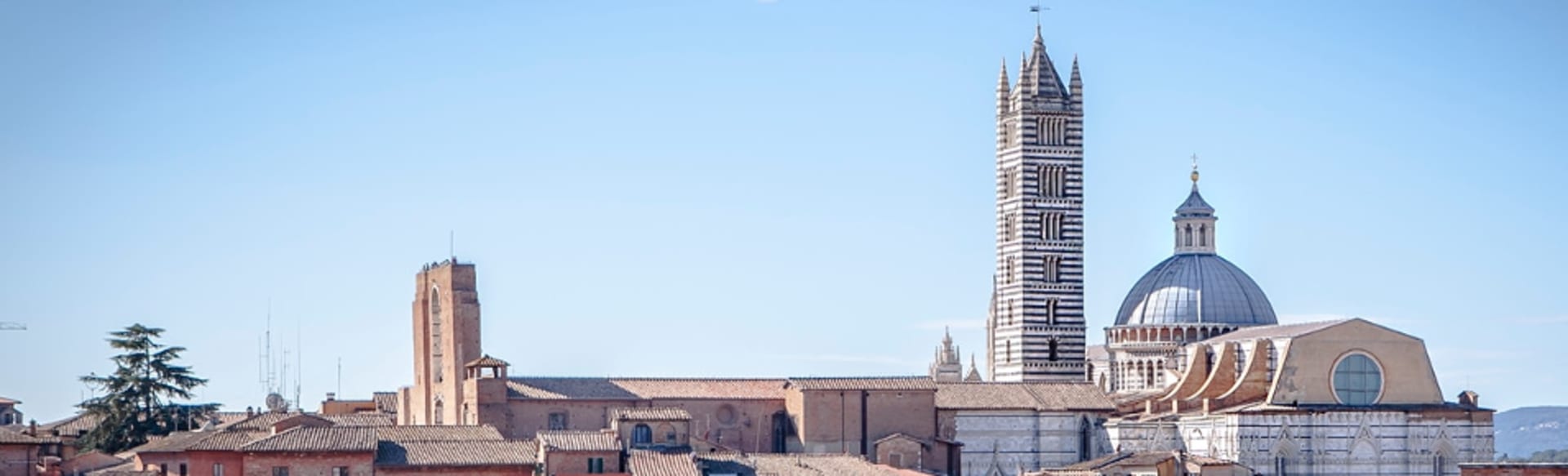
Beautiful Location: Siena is a picturesque city with a rich history and stunning architecture. The city’s medieval cityscape and scenic countryside provide a unique and inspiring setting for studying.
Language and Cultural Immersion: Studying in Siena offers the opportunity to learn or improve Italian language skills, as well as gain a deep understanding of Italian culture and history.
Studying Abroad
International students enrolled at the University of Siena can participate in several international exchange programs, such as the Erasmus+ program, which allows our students to study abroad for a semester or one academic year, providing valuable international experience.
Our International programs allow students of the University of Siena to spend a study period (from 2 to 12 months) at one of the other 500 partner universities worldwide.
It is possible to carry out the mobility during each study cycle (bachelor, master of PhD), attend courses and sit exams, prepare thesis work and carry out internship activities. Participants in the International mobility programs will get full recognition for the credits obtained abroad.
In addition to in-presence teaching, which continues to be the preferred method also in the next Academic Year, every single lesson will be simultaneously live-streamed and/or video recorded and uploaded on our digital platform for subsequent viewing. This mode is essential for students who are temporarily unable to be on premises.