
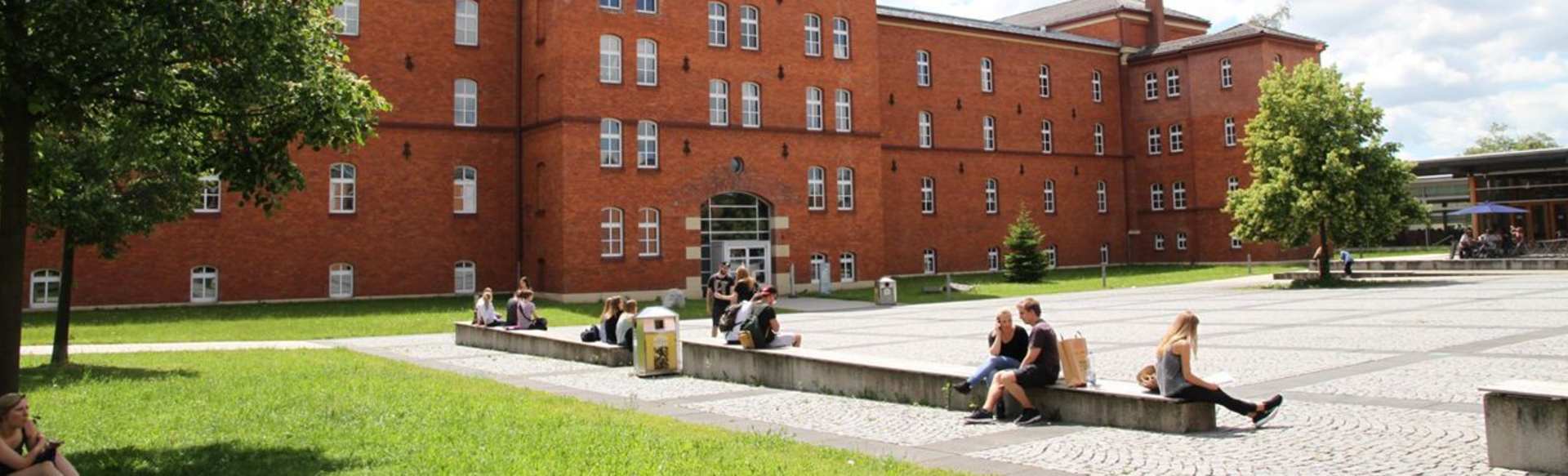

University of Applied Sciences Ansbach
Master of Engineering in Smart Energy Systems
Ansbach, Germany
M.Eng. (Master of Engineering)
DURATION
3 semesters
LANGUAGES
English
PACE
Full time
APPLICATION DEADLINE
15 Sep 2026*
EARLIEST START DATE
Oct 2026
TUITION FEES
EUR 1,000 / per semester **

STUDY FORMAT
On-Campus
* 1st May to 15th September
** for non-EU nationals
Key Summary
About: The Master of Engineering in Smart Energy Systems (SES) at the University of Applied Sciences Ansbach is an English-language program preparing interdisciplinary experts for the energy transition. You study decentralized producer and consumer technologies, AI, optimization, and ICT for secure data exchange. Learn design, operation, and optimization of energy systems and use digital tools for forecasting, storage, control of PV, wind, batteries, and charging infrastructure.
Career Outcomes: Graduates work in energy suppliers/municipal utilities/direct marketing, real estate and building services, automotive, renewable/conventional generation, storage, and energy-intensive industries; roles include management, development, implementation, sales, operations, systems engineer, energy analyst, project manager.
Driven by the energy transition, the energy industry is currently undergoing a major change. The share of renewable energy sources such as photovoltaics or wind power is growing steadily, allowing consumers to generate energy rather than only consuming it. The increasing decentralisation of plants and the increased volatility of energy production, e.g. due to changing solar radiation, make intelligent networking necessary. Only digitalisation will enable both the conversion to an economical and renewable energy system, securing supply in the long term.
For this, interdisciplinarily trained experts are needed who have profound expertise in the field of energy sciences and digital technologies as well as competencies for organisational implementation under economic, legal and ecological aspects.
To this end, students in the international and English-language Master's degree programme SES learn the different producer and consumer technologies in modern, decentralised energy grids. They deal in particular with the exchange of information between the individual participants and the associated transmission paths as well as the resulting interaction of the overall system. Knowledge from the field of artificial intelligence (AI) and optimisation is also taught, combined with the respective possibilities from the field of information and communication technology for secure and reliable data exchange. The aim is to sharpen the understanding of the individual generator and consumer technologies and, in particular, to impart knowledge and skills with regard to the optimal operation of an entire energy system.
Students thus acquire knowledge about the design, operation and optimisation of intelligent, decentralised energy systems through the application of innovative and digital technologies. The growing complexity and interconnection of the energy sectors makes SES graduates ideal specialists and managers not only in the field of energy production and marketing, but also in the real estate industry and building technology sector, the automotive industry or in energy-intensive industries (building materials, chemicals, glass, non-ferrous metals, paper and steel).
Example of an intelligently networked energy system:
Residential house with PV system, battery storage, heat pump and charging station for an electric car.
Winter morning, it is cold outside, but the sun is shining and the PV system is supplying electricity. The residents are at school or at work. The AI recognises the consistently sunny weather forecast and activates the washing machine. Since a severe frost is forecast for the coming night, the heat pump also runs to sufficiently charge the heat buffer. The battery storage is charged with surplus electricity.
In the evening, the family comes home and the electric car is connected. The increased energy demand expected by the AI due to light and other consumers in the house will greatly reduce the charge level of the battery storage, so that the charging process with own electricity is not released for the electric car. Since no trips are necessary for the next day in the home office, the AI also decides not to charge the car with grid electricity overnight, but waits until sufficient wind energy (weather forecast) is available the next day.
This sounds simple, but it is a highly complex task. Not every system consisting of individual energy generators, consumers and storage units is automatically "smart". Not only energy flows, but above all, information, forecasts and data must be exchanged. In addition, there must be an intelligent instance that translates this information and data into decisions and communicates these to the participants in real time or as a forecast or timetable. In the future, more and more of these highly complex energy systems will emerge as an important building block for the energy transition and a sustainable and regenerative energy supply.
The English-language Master's programme "Smart Energy Systems" comprises 90 ECTS, which can be completed in three semesters. If you enter with a degree comprising fewer than 210 ECTS, you may have to allow additional time to make up modules/ECTS.
In the first semester, the Energy Systems / Energy Economics module teaches elementary technical knowledge about the components and participants of the energy system. The simulation of decentralised energy systems is one of a total of five digital modules in the first semester, in which the interaction of the individual participants in the energy system with each other is dealt with. In IoT Technologies and Data Interfaces, students learn how digitally networked, intelligent systems are created through sensor technology and internet connections. With the basics of programming in LabVIEW, an easy-to-learn graphical programming environment, and the basics of artificial intelligence, the focus is on computer-based problem solving and analysis. A compulsory elective module allows a look at other exciting topics in both the first and second semesters.
In the second semester, Virtual Power Plant is concerned with another essential component for the energy systems of the future, namely the connection of decentralised energy producers with systems for storing or otherwise using surplus energy in so-called power-to-X plants for a reliable supply. How such systems communicate safely with each other and make decisions autonomously - without human intervention - is the topic of the module AI Applications in Energy Systems / Blockchain. Entrepreneurial thinking and action shed light on energy entrepreneurship - new business models through digitalisation. Selected guest lecturers from the business world present their personal success stories as entrepreneurs and encourage students to realise their own ideas, for example, in start-ups. Optimisation / Operations Research picks up on the knowledge and tools from the first semester in order to be able to optimally align and operate even complex systems using simulation. "Hands on!" is the motto in the project work - networked energy landscape, where students plan, implement and present their own project - an ideal preparation for later professional life.
The third semester allows students to deepen their knowledge of selected topics in the master's thesis, which is planned in cooperation with various companies. The master's seminar on scientific work accompanies the master's thesis, opens up the exchange between students in the form of lectures and provides the tools for a solid scientific approach.
You complete the Master's programme in three semesters. After successful completion, you will be awarded the internationally recognised academic degree Master of Engineering (M.Eng.).
There is currently a high and growing demand for specialists in the field of intelligent networking of decentralised energy producers and consumers. Due to the increasing complexity and interconnection of sectors, the need for qualified specialists and managers with a profound understanding of intelligent energy systems is growing. New business areas and business models are emerging as a result of the networking, which SES graduates can identify and implement.
Industries
- Energy suppliers/municipal utilities/direct marketers
- Real estate industry and building services engineering
- Automotive industry
- Renewable generation (PV, wind, biogas, geothermal)
- Conventional/flexible generation (CHP, district heating)
- Storage (batteries, hydrogen)
- Energy-intensive industry
Fields of activity
- Management positions
- Development
- Implementation
- Business Development
- Sales
- Operations