- PhD
- On-Campus
Doctor of Philosophy in Public Policy and Political Economy
- duration
- languages
- English
- pace
- Full time
- Application Deadline
- Earliest start date
- Dec 2026
At a glance
About: The PhD in Public Policy and Political Economy at The University of Texas at Dallas develops analytical, empirical and policy-making skills. It studies how policies are created, analyzed and evaluated within economic and political contexts, covering governance, public finance, social policy and political economy theory. You’ll do advanced empirical coursework, work with faculty advisors, pass comprehensive exams and complete an original dissertation.
Career Outcomes: Graduates move into roles as academic researchers, assistant professors, policy analysts, think-tank fellows, government advisors, policy consultants, and leadership jobs in nonprofits and private-sector strategy or regulatory affairs, and international organization advisors and policy evaluation
The Doctor of Philosophy (Ph.D.) in Public Policy and Political Economy is designed for students who want to develop strong analytical, research, and policy-making skills. The program emphasizes understanding how policies are created, analyzed, and evaluated within economic and political contexts. Students will explore various topics, including governance, public finance, social policy, and the economic theories behind political decision-making. The curriculum encourages rigorous research and critical thinking, preparing students to contribute to academia, government, or policy organizations.
Students in this program engage in advanced coursework that combines empirical research methods with policy analysis, allowing them to study complex issues like economic development, inequality, and governance structures. The program also offers opportunities for deep engagement with faculty advisors through comprehensive exams and original research projects, typically culminating in a dissertation. With a focus on both public policy and political economy, students are equipped to analyze the interplay between economic incentives and political institutions, fostering a well-rounded understanding of policy impacts across different sectors and communities. The program prepares graduates for careers in research, academia, or leadership roles in public and private sectors.
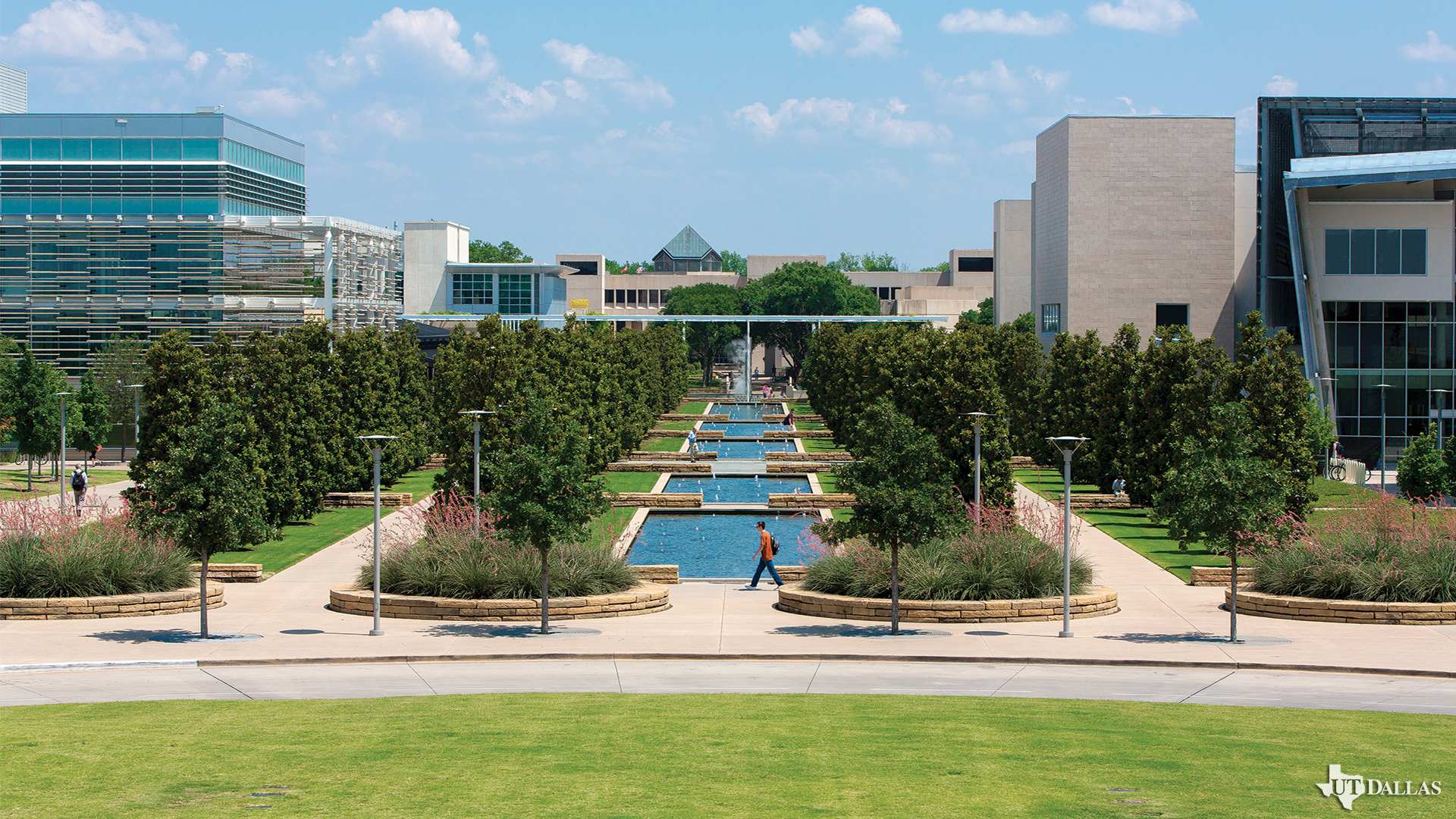
The University of Texas at Dallas (UT Dallas), founded in 1969, is a prominent public research university located in Richardson, part of the Dallas–Fort Worth metroplex. With a sprawling 645-acre suburban campus, UT Dallas serves nearly 31,000 students—approximately 21,000 undergraduates and 10,000 graduate students. It is part of the University of Texas System and is classified as an R1 institution, reflecting very high research activity and national recognition for excellence.
Academically, UT Dallas offers over 140 degree programs across seven schools, spanning fields such as STEM, business, arts, humanities, and interdisciplinary studies. The university hosts more than 50 research centers and institutes focused on areas like space science, cybersecurity, nanotechnology, and behavioral neuroscience. Notably, the Naveen Jindal School of Management and the Erik Jonsson School of Engineering and Computer Science are among its fastest-growing and highly regarded academic units, supported by strong industry ties and pioneering programs.
Student life at UT Dallas is defined by innovation and community. With more than 300 student organizations, a variety of intramural and intercollegiate sports (the Comets), and burgeoning esports initiatives, campus engagement is robust. UT Dallas prides itself on a diverse student body, cutting-edge facilities, and a vibrant urban-suburban setting that offers unparalleled access to internships, cultural venues, and career opportunities with major Fortune 500 companies in the region.

The University of Texas at Dallas
800 W. Campbell Road, 75080-3021, Richardson