
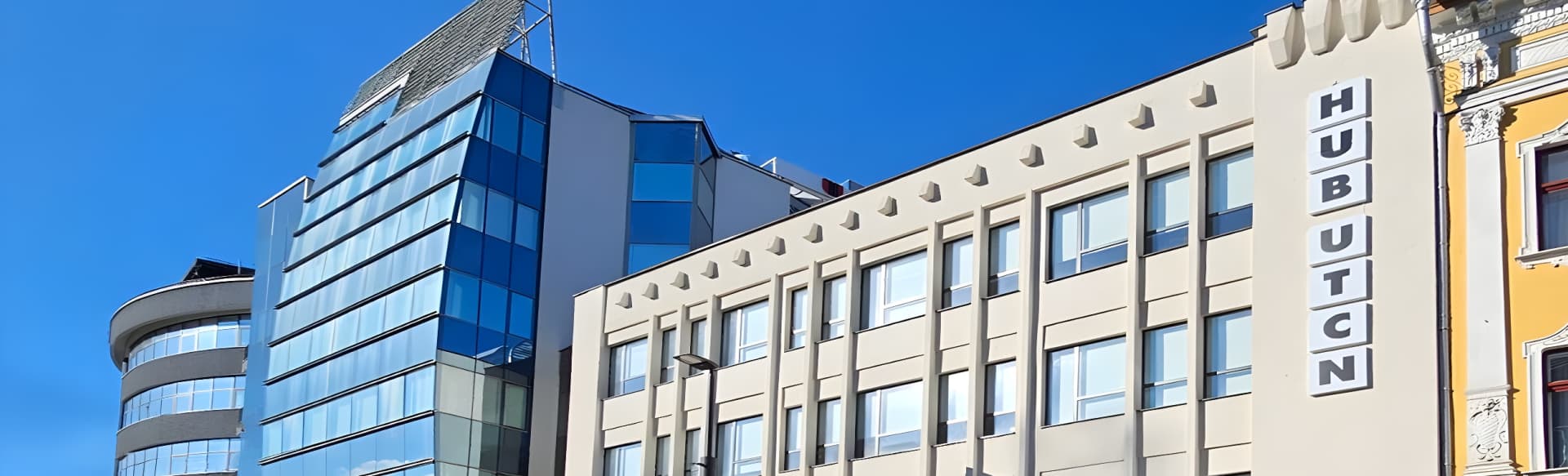

Technical University of Cluj-Napoca
Bachelor programme (BA/ BSc) Civil, Industrial and Agricultural Constructions
Cluj-Napoca, Romania
BA
DURATION
4 years
LANGUAGES
English
PACE
Full time
APPLICATION DEADLINE
01 Jul 2027*
EARLIEST START DATE
Oct 2027
TUITION FEES
EUR 2,700 / per year

STUDY FORMAT
On-Campus
* application period: March-July
Key Summary
About: The BA/BSc in Civil, Industrial and Agricultural Constructions at The Technical University of Cluj-Napoca gives first-year foundations in math, physics, computer science, materials, chemistry and history of constructions. Second-year core courses include mechanics, strength of materials, engineering geology, technical drawing, hydraulics and statistics. The final year deepens technical and scientific specialization, preparing students for design, execution, maintenance and rehabilitation of residential, office, agricultural and special structures such as tanks, water towers, silos and sports facilities.
Career Outcomes: Graduates can work as structural engineers, site engineers or construction managers in construction and agriculture, in design offices, contractors or postgraduate study.
The first part of the engineering studies provides students with strong general education, preparing them for further technical specialization in the second part of the study programme. The first year provides education in sciences as mathematics, physics, computer sciences, building materials and chemistry, descriptive geometry. In the first year students also attend courses of foreign languages and history of constructions. The second year initiates technical and scientific training through a number of basic courses in engineering sciences (mechanics, strength of materials, engineering geology, technical drawing, hydraulics, numerical analysis, stastics of constructions).
The graduates of Civil, Industrial and Agricultural Buildings are prepared for the, design, execution, maintenance, monitoring and rehabilitation of a large range of buildings: residential buildings, office buildings, social and cultural buildings, agricultural and stock raising halls, special buildings (tanks, water towers, silos), sports facilities.
The curricula of the final year is caracterized by an in-depth approach to technical and scientific issues.