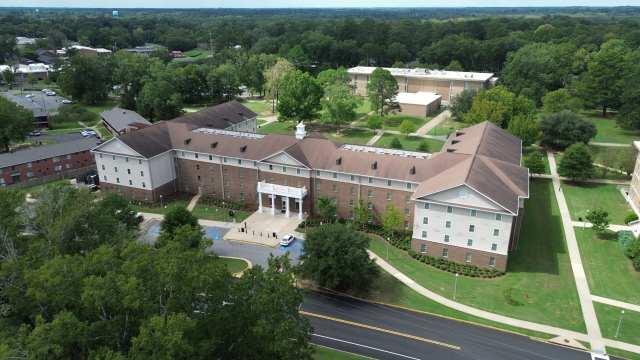


Cybersecurity and Computer Forensics, Associate in Applied Science
Port Angeles, USA
Associate of Applied Science
DURATION
6 semesters
LANGUAGES
English
PACE
Full time
APPLICATION DEADLINE
EARLIEST START DATE

STUDY FORMAT
On-Campus, Distance Learning
Fast-track counseling
By contacting the school, you'll get access to free priority counselling for any study and application questions.
Key Summary
About: Peninsula College's Cybersecurity and Computer Forensics Associate in Applied Science (AAS) prepares students for entry-level work in cybersecurity and computer forensics. Courses introduce legal, ethical, and theoretical issues and build practical skills in ethical hacking, vulnerability assessment, evidentiary analysis, and forensically sound practice. Capstone includes practicum and Collegiate Cyber Defense Competition participation. Students must have access to a computer, the internet, and a browser.
Career Outcomes: Graduates can work for public and private employers as computer forensic analyst, cybersecurity specialist, incident responder, information security analyst, security monitoring and event analysis, or system and network penetration tester. Some employers may require background checks for roles.
Increased cybersecurity threats and new homeland security policies have produced a growing national demand for cybersecurity professionals with knowledge of cybersecurity, ethical hacking, intrusion testing, vulnerability assessment, and computer forensics. In addition, the growth of universal and mobile computing requires new approaches to information security and the protection of information systems from unauthorized access, modification, or destruction. The Cybersecurity and Computer Forensics program prepares students for entry-level employment in cybersecurity and computer forensics careers including cyber incident and response, vulnerability detection and assessment analysis, computer forensic analyst, and computer forensics investigator. Foundation courses introduce students to the legal, ethical, and theoretical issues in cybersecurity and computer forensics technology. Core courses expand student depth and skills in ethical hacking, criminal justice, evidentiary analysis, and the development of a forensically sound environment. Capstone courses provide practicum experience and the opportunity to participate in the Collegiate Cyber Defense Competition (CCDC). Successful completion of this program leads to an Associate in Applied Science (AAS) degree in Cybersecurity and Computer Forensics. Students are required to have access to a computer, the internet, and a browser.
(Students who plan to transfer to Western Washington University’s BS in Computer and Information Systems Security program must complete MATH& 141 Pre-Calculus I, MATH& 142 Pre-Calculus II, and MATH& 151 Calculus: Analytic Geometry. Please note these Math classes are not always offered online.)
Special Features
- The program encourages students to explore the legal, ethical, and global impact of cybercrime on private, public, and personal computing infrastructures.
- The courses are based on the CNSSI standards established by the U.S. National Security Agency (NSA) for training information systems security professionals.
- The program provides to date curriculum that adapts to the rapidly changing field of cybersecurity and computer forensics.
- The Peninsula College Cybersecurity and Computer Forensics program are significantly more cost-effective than most private and public schools.
Sample Schedule
This Sample Schedule is provided as a guide for a full-time student starting in the fall quarter whose goal is to earn the Associate in Applied Science (AAS). The typical student schedule is based on entering the program during the fall quarter, however, some programs allow students to enter in the winter or spring as well. Since not all do, please confirm with an advisor whether this program must be started during a specific quarter or not.
First Quarter (Fall)
- Applied Math for Professional and Tech Programs I
- Introduction to Computer Science
- Introduction to Cybersecurity and Cybercrime
Second Quarter (Winter)
- Cybersecurity I: Risks, Control, and Encryption
- Computer Forensics I: Intro to Computer Forensic
- Introduction to Networking
Third Quarter (Spring)
- Cybersecurity II: Securing the Modern Enterprise
- Database Design and Implementation
- Contemporary Global Issues
Fourth Quarter (Fall)
- Cybersecurity III: Ethical Hacking
- English Composition I
- IT 225 or IT 260 +
Fifth Quarter (Winter)
- Criminal Evidence
- Cybersecurity Capstone
- General Psychology
Sixth Quarter (Spring)
- AOS 170 or ENGL& 102 or ENGL& 235 +
- Database Driven Websites
- Elective +
When this program is completed, the student will be able to:
- Demonstrate an understanding of the core concepts, tools, and methods used to secure computer systems
- Identify and present indicators that a cybersecurity incident has occurred
- Apply criminal justice methods to cybersecurity and computer forensic investigations
- Plan, implement, and evaluate penetration testing and ethical hacking of computer systems
- Identify, analyze, and mitigate threats to internal computer systems
- Collect, process, analyze, and present computer forensic evidence
- Work in teams to analyze and resolve cybersecurity issues
- Apply critical thinking skills to risk analysis of computer systems
There is a high demand for talented people with cybersecurity skills, and an increasing number of employers are seeking workers with knowledge of Computer forensics tools. Graduates may find positions with a variety of critical infrastructure companies and organizations in the public and private sectors. Some employers may require employee background checks.
- Computer forensic analyst
- Cybersecurity specialist
- Incident responder
- Information security analyst
- Security monitoring and event analysis
- System and network penetration tester