- PhD
- On-Campus
Ph.D. in Genetics
- duration
- 4 years
- languages
- English
- pace
- Full time
- Application Deadline
- Earliest start date


At a glance
About: Ph.D. in Genetics covers heredity, variation and systems-level biology across molecular genetics, functional genomics, transmission, evolutionary and population genetics, plus bioinformatics and omics. Studies run three or four years (full-time); five years (part-time). Candidates follow a credit system (~60 credits/year), take coursework related to their dissertation, pass comprehensive exams by year two, teach up to four hours weekly, publish at least two peer-reviewed papers and work under an approved supervisor with research teams.
Career Outcomes: Graduates enter academia, medicine, pharma, agriculture, food science, forestry, bioinformatics and R&D. They can be principal investigators, faculty, research scientists, managers and policy advisors.
Ph.D. Program Description
Genetics is a scientific branch dealing with heredity and variation of organisms. Modern genetics is an essential and fundamental part of the majority of biological disciplines with a great impact on medicine, agriculture, food or pharmaceutical industries. Our Ph.D. program in Genetics is based on a systems-level understanding of biological processes and their regulation from cells and individuals to populations with an accent on evolutionary aspects. Doctoral projects in molecular genetics and functional genomics concentrate on how the genes are expressed and regulated. Projects in transmission genetics cover how genes are transmitted to the next generations. Evolutionary and population genetics projects focus on how genes behave and change within and between populations over time. As a part of the university research team BIOACTIV, we are developing bioactive substances for biomedical applications. The study program in Genetics offers the students a great deal of flexibility aimed not only at the successful completion of their Ph.D. study but reflects their scientific preferences for future career development as well.
How the study is organized?
The study is organized as full-time or part-time. A standard timeframe for completion of a doctoral degree is judged to be three or four years. In the case of part-time studies, the duration is five years. The doctoral candidates should fulfill the research, learning and teaching requirements. They are based on a credit system, on average 60 credits per academic year. Typically, 1/3 of credits are allocated to learning activities and 2/3 of credits are gained from research.
The choice of courses within the learning part of a study depends on the dissertation research topic. The doctoral candidates can choose the courses offered by P. J. Šafárik University in Košice but also by other universities in the city, University of Veterinary Medicine and Pharmacy and the Technical University of Košice. Both, the learning and research part of a study begin simultaneously but the learning part has to be completed by the end of the second academic year passing written and oral comprehensive exams based on the major (Genetics) and chosen minor areas.
A full-time doctoral candidate has to participate in teaching activities according to the national law (not more than four hours a week). The doctoral candidates are eligible for supervising a bachelor's thesis.
Dissertation research is conducted under the guidance of the selected supervisor. The supervisors are nominated from among Professors, Associate Professors, and senior scientists and are approved by the Scientific Board of the Faculty of Science, P. J. Šafárik University in Košice. The student is responsible for conducting the experiments within the research plan. The progress is assessed continuously and annually by the supervisor. Doctoral students are expected to actively participate in project meetings, seminars, conferences, and other research activities. The students are encouraged to prepare a research project and apply for a grant within the internal university grant system with special attention to interdisciplinary projects that bring together doctoral candidates from different faculties/departments and undergraduate students to build teamwork and share research experience. The students are also fortified to spend a part of their study at collaborating institutions abroad.
Completion requirements encompass sufficient depth of knowledge in Genetics, rigorous research training and acquiring research and career skills. Formal requirements for successfully completing the doctoral study are set as recommendations of the University Commission of Doctoral Studies in Genetics. A doctoral candidate has to publish at least two scientific outputs in peer-reviewed periodicals.
Ph.D. graduate profile
The graduates of Ph.D. study in Genetics are knowledgeable and skilled in a wide spectrum of experimental methods especially in Molecular genetics, Molecular Cytology, and Microbiology in light of the “omics” levels. They are experienced in work with a variety of models and non-model experimental systems and they can apply the acquired knowledge in a great number of professions. An essential part of their Ph.D. study is attaining the bioinformatics skills for data mining and data processing available form DNA/RNA sequencing technologies.
The graduates are capable of both, creative individual and teamwork, critical judgment, evaluation and interpretation of the acquired results in view of the current state of the art.
Admission requirements
All applicants to a Doctor of Philosophy (Ph.D.) program at the Faculty of Science must meet the admissions requirements for entry. We welcome graduates who successfully completed a master´s degree in genetics or related field of study. Other professional experiences, language skills, letter(s) of recommendation are also considered. The applicants apply electronically. The printed and signed version of the application contains the following documents:
- Complete online application form
- Certified copy of a Masters Diploma (notary verified)
- A Curriculum Vitae including a list of published and unpublished work
- Documents regarding professional experience (if any)
- An academic transcript of records
- Ph.D. project proposal (up to 5 pages)
- Motivation Letter
- Application Fee
Admission Fees and Funding
Application forms need to be submitted either by post or online. The application fee for doctoral study programs is 50 EUR (by post) or 30 EUR (online).
The doctoral study is financially supported by providing funding (stipend) for students. Each year the University allocates a certain number of Ph.D. positions for each doctoral study program. These positions are eligible for funding of ca. 10,000 EUR annually per student. More doctoral students than this number of funded positions can be admitted only as self-payers. Such a study is subject to a tuition fee of 5,000 EUR per academic year (2,500 EUR per semester) and no state funding is applicable. The study is taught in Slovak or English with no impact on tuition fees at the Faculty of Science.
We also welcome students within mobility exchange schemes such as Erasmus+, Ceepus, SAIA, Cotutelle, and others following the conditions of the schemes and the candidates should contact the International Relations and Scientific Research Office before sending an application.
Career prospects
Doctoral degrees in Genetics allow for a great number of career choices in research and education, medicine, pharmaceutical and food industries, agriculture and forestry and other spheres of public life. The doctoral degree represents an essential academic preparation of the graduates for future research and teaching roles at university. The graduates are able to become principal investigators in various research labs of public institutions and private companies in a variety of fields. They are also able to occupy managerial positions in the relevant fields. Doctoral study in Genetics provides the graduates flexible possibilities to develop their future career paths as professors, researches in medical science, pharmacology, food, and agricultural sciences, computer science focused on bioinformatics, and in management of public and private spheres.
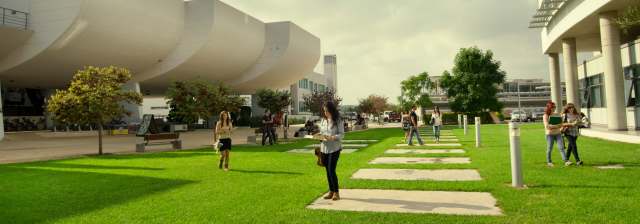
photo courtesy of Pavol Jozef Safarik University Faculty of Science
Seriously keen on science, therefore, resulting in high-quality education at Pavol Jozef Šafárik University in Košice (UPJŠ) ranked among the best three in the country. Founded in 1963, the Faculty of Science, has educated over 6 000 graduates of both, joint and single degree studies. Currently, over 350 Bachelor’s, Masters’s, and Doctoral students graduate each year in disciplines that impact lives today and will shape our future. We are open to provide this opportunity also to international students who enjoy also the compactness of Košice being a historical European city dominated by young people, culture, and sport.
Faculty profile
UPJŠ is a research-based university generating its highest level of scientific knowledge by a vibrant community of young researchers in collaboration with their supervisors. Faculty of Science is the strongest contributor to the research outputs of the university. Our ambition is to provide specialized and highly trained researchers for fundamental scientific research and its application in Biology, Chemistry, Ecology, Geography, Informatics, Mathematics, Physics, and Science Education. The Faculty is organized in 6 scientific institutes that comprise departments.
Research Focus
The research in Biology and Ecology focuses on biodiversity of plants and animals, biotechnology of medicinal plants, prevention, and cancer therapy, and plant genetics; in Geography on geospatial modelling of solar energy in urban space, soil erosion, demogeography, population migration and application of remote sensing from satellites and drones; in Chemistry on synthesis and properties of new compounds as biologically active species and new materials with biological activity, hydrogen storage, development of batteries; in Informatics on fuzzy techniques, artificial intelligence, and machine learning; in Mathematics on graph theory, algebraic structures, differential equations, topology and big data analysis; in Physics on development of new magnetic materials, theoretical and experimental research of low-dimensional magnetism and quantum liquids at ultra-low temperatures, nuclear collision studies, photo-dynamic effect, astrophysics, and biophysics; in Science Education on active learning methods, inquiry skills development and formative assessment.
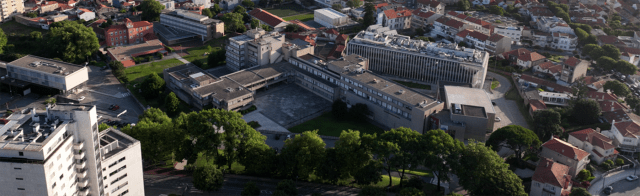
photo courtesy of Pavol Jozef Safarik University Faculty of Science
Addressing Global Challenges
Through our education and research, we strive to address some of the world’s greatest challenges such as green energy, nanotechnologies, artificial intelligence, big data analysis, climate change, cybersecurity, or cancer. This has resulted in new treatments for patients, new design of electric batteries and intelligent materials, Earth observation in high-resolution and greater levels of data and food protection.
Faculty Institutes
- Institute of Biology and Ecology
- Institute of Chemistry
- Institute of Geography
- Institute of Computer Science
- Institute of Mathematics
- Institute of Physics
Our study in all three levels of university education is based on the inverse pyramid of knowledge and skills. The Bachelor’s degree aims to develop fundamental knowledge and scientific skills in 7 major scientific disciplines. The students can specialise on particular scientific branches in the Master’s degree in 19 programmes. The highest scientific specialisation is developed in one of the 22 doctoral study programmes when the graduates become valuable experts in their discipline. The joint degree of the bachelor level provides an opportunity to study a combination of two subjects. The student can opt for specialising on one of the disciplines on the master level or continue with the combination in the Teaching of academic subjects to become a school teacher.
Single degree Bachelor’s (BSc.) study programmes (3 years):
- Biology
- General Ecology
- Chemistry
- Geography
- Informatics, Applied Informatics
- Physics, Biophysics
- Mathematics, Data Analysis and Artificial Intelligence, Economic and Financial Mathematics
Joint degree Bachelor’s (BSc.) study programmes:
Combination of two subjects from Biology, Chemistry, Geography, Informatics, Physics, Mathematics, or other subjects of the Faculty of Arts (e.g., History, Psychology, Philosophy, English, German, Slovak). The graduate can take a masters' degree teaching study programme or single degree masters' programme.
Magister’s study (equivalent to Master’s study) study programmes (2 years):
- Analytical Chemistry
- Biochemistry
- Physical Chemistry
- Inorganic Chemistry
- Organic Chemistry
- Botany and Plant Physiology
- Cell and Molecular Biology and Genetics
- Zoology and Animal Physiology
- General Ecology
- Geography and Geoinformatics
- Informatics
- Informatical Mathematics
- Mathematics of Economics and Finance
- Managerial Mathematics
- Biophysics
- Theoretical Physics and Astrophysics
- Physics of Condensed Matter
- Nuclear and Subnuclear Physics
The teaching of Academic Subjects
Joint (two-subject) teachers´ study program in a combination of two subjects from the following: Biology, Chemistry, Geography, Mathematics, Physics, and Informatics or other subjects of the Faculty of Arts (e.g., History, Psychology, Philosophy, English, German, Slovak). Graduates are prepared as teachers for primary and secondary education. They can also work at universities, scientific and research institutions.
Doctoral study (PhD.) programmes (4 years):
Biology and Ecology:
- Genetics
- Animal Physiology
- Molecular Cytology
- Plant Physiology
- General Ecology
Chemistry:
- Analytical Chemistry
- Biochemistry
- Inorganic Chemistry
- Organic Chemistry
- Physical Chemistry
Geography:
- Geoinformatics (GIS) and Remote Sensing
Mathematics and Information Science:
- Informatics
- Discrete Mathematics
- Applied Mathematics
Physics:
- Condensed Matter Physics
- Theoretical Physics
- Astrophysics
- Biophysics
- Nuclear and Sub-nuclear Physics
- Modern Materials
Science Education:
- Theory of Mathematics Teaching
- Theory of Physics Teaching
Admission
Bachelor’s programs (equivalent to BSc.) require prospective students to have completed secondary education. The deadline for the submission of an application is 31 March each year.
Magister’s(equivalent to MSc.) programs require prospective students to have completed a Bachelor’s study. The entrance exam can be required by the academic board for a given program depending on the results and scientific focus of the previous study. The deadline for the submission of an application is 30 June each year.
Doctoral (PhD.) programs require the candidates to have completed a Master’s study and successfully passing an entrance interview which is organized in the last two weeks of June each year. The deadline for the submission of an application is 31 May each year.
Fees and Funding
Application forms need to be submitted either by post or online. Bachelor and Master programmes require to pay an application fee of 40 EUR (send by post) or 20 EUR (submitted online). The application fee for doctoral study programmes is 50 EUR.
The study in Bachelor’s and Magister’s programmes in the Slovak language is free of charge for domestic citizens, EU citizens and citizens of third countries. The study in the English language is subject to a tuition fee of 3,000 EURO per academic year (1,500 EUR per semester). We provide Slovak language courses for international students free of charge.
Students of Bachelor’s and Master’s programmes are eligible for motivation stipends (ca. 1400 EUR anually) if they belong to the 20% best students in their study programme. The students can also apply for a research or technical job position within their field at the faculty (1200 EUR anually).
The doctoral study is financially supported by providing funding (stipend) for students. Each year the University allocates a certain number of PhD. positions for each doctoral study programme. These positions are eligible for funding of ca. 10,000 EUR annually per student. More doctoral students than this number of funded positions can be admitted only as self-payers. Such a study is subject to a tuition fee of 5,000 EUR per academic year (2,500 EUR per semester) and no state funding is applicable. The PhD. study is taught in Slovak or English with no impact on tuition fees at the Faculty of Science.
We also welcome students within mobility exchange schemes such as Erasmus+, Ceepus, SAIA, Cotutelle and others following the conditions of the schemes and the candidates should contact the International Relations and Scientific Research Office before sending an application.
Career Prospects
The graduates of the Faculty of Science enter the job market with hard and soft skills supported by strong theoretical knowledge and practical experience. They easily find employment as innovators and creative employees in academia, researcher institutions, business and public administration. Students of programmes for teaching educate young generation on primary and secondary schools.
Accommodation
The University has over 1,700 accommodation places in its facilities and 450 places in the leased accommodation facilities of external contractual partners. The allocation of places to the candidates is transparently regulated by the House and the Accommodation Rules, according to which the entire accommodation capacity was divided among university students regardless of the study programme and the Faculty they are studying at. The Accommodation was allocated to all the applicants with severe disabilities, as well as to all the applicants - students of the third level of education. The cost of university accommodation varies between 60-90 EUR per month. Accommodation in private apartments in Košice varies from 150-250 EUR per month.
City and Region
Košice is the second-largest city in Slovakia with almost 240,000 inhabitants and thousands commuting every day for work, study or leisure. The City has always been a natural centre of business, culture, and education. The business routes leading from the Baltic Sea to the Mediterranean have been crossing here ever since the Middle Ages. Numerous rich archaeological sites are preserved in the surroundings of the city proving the settlement of the region since the Stone Age. "Villa Cassa" gradually transformed into a city thanks to its favorable location, royal privileges, immigrants, and flourishing crafts.
Today, Košice is the city of the young generation with over 20,000 students. Many of them find jobs in IT business which is the fastest growing industry in the region providing jobs for over 11,000 employees. The rich history and promising future attract thousands of visitors coming to the city every year utilizing major railway, road, and air connections. The Košice International Airport handles over 500,000 passengers annually. The city is within 3 - 4 hours drive by bus or car from other international airports in Budapest or Krakow with many European and worldwide connections.

Pavol Jozef Safarik University Faculty of Science
Univerzita Pavla Jozefa Šafárika Prírodovedecká fakulta Šrobárova 2 SK - 041 54 Košice Slovak Republic, Košice