- MSc
- On-Campus
Quantitative Finance and Risk Management MSc
- duration
- 12 months
- languages
- English
- pace
- Full time
- Application Deadline
- Earliest start date
- Sep 2027
- tuition fees
- GBP 33,050 / per year
no application closing date for this course
international students | GBP 16,800 - home students
At a glance
About: The Quantitative Finance and Risk Management MSc at a Global Top 150 university in Newcastle (28,000 students from over 130 countries) teaches generalist finance and specialist skills in quantitative methodology, econometrics, financial modeling and risk management. You'll prepare for roles in financial services, investment banking, risk management and quantitative analysis.
Career Outcomes: Graduates work as financial traders, financial analysts, risk analysts, economic-modeling engineers, investor-relations advisors, economists and auditors; employers include HSBC, ICBC, Nomura, PwC and KPMG. Career opportunities include quantitative researcher, risk manager and portfolio manager in banking, asset management, energy, consultancy and government sectors and corporate finance roles.
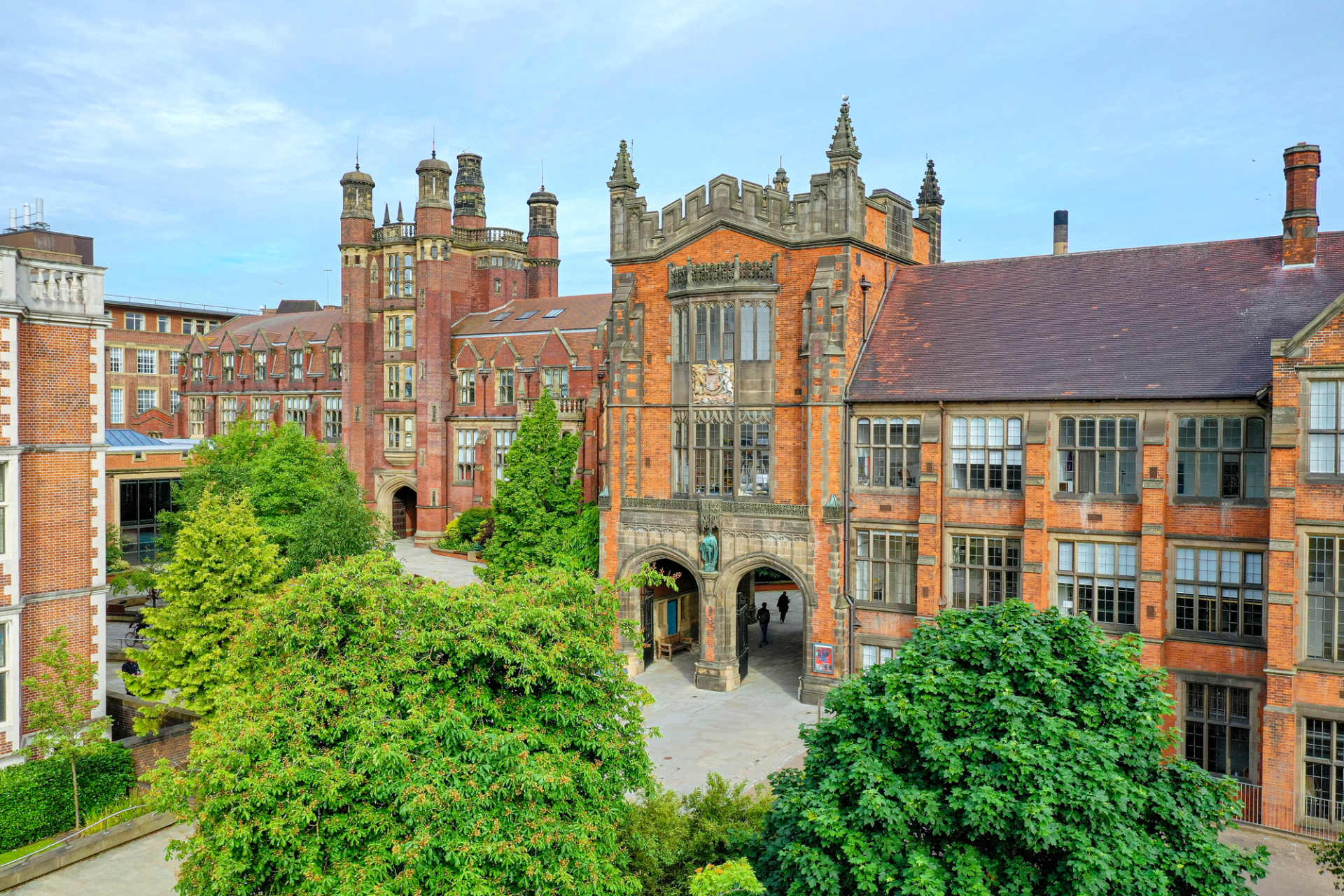
A Global Top 150 university (QS World University Rankings 2027), Newcastle is home to 28,000 students from over 130 countries.
Our Quantitative Finance and Risk Management MSc will develop your understanding of generalist finance issues. You'll also develop specialist practical skills in quantitative methodology and risk management.
Develop your career in financial services, or as a quantitative analyst in investment banking and risk management fields.
There has been worldwide growth in the financial services sector. This has fuelled the demand for suitably qualified graduates. We ensure you'll graduate ready to meet this demand. You'll develop a sound understanding of generalist finance issues, and gain specialist skills in quantitative methodology and risk management.
You'll be able to develop a career in the financial services sector. The course is also suitable for future quantitative analysts in economics and finance.
Entry requirements
The entrance requirements below apply to 2027 entry.
Our entry requirements and offer information will be finalised in September 2026. Please check the website for any updates at the beginning of September.
Academic entry requirements
A 2.2 Honours in any discipline. Applicants must hold at least a C-grade in A-level Mathematics (or equivalent) OR have studied a relevant mathematics/quantitative module at university level. This may include:
- basic calculus
- probability theory
- statistical inference
You can use your personal statement to show your mathematical knowledge if it is not clear from your transcripts.
English Language requirements
Direct Entry
- IELTS: 6.5 overall (with a minimum of 6.0 in all sub-skills).
- Pearsons: 70 overall (with a minimum of 65 in all sub-skills).
- Duolingo: 125 overall (with a minimum of 100 in listening, 115 in reading, 115 in speaking, and 125 in writing).
- TOEFL:
Pre-January 2026: 90 overall (with a minimum of 19 in listening, 20 in reading, 22 in speaking, and 20 in writing).
Post-January 2026: 4.5 overall (with a minimum of 3.5 in listening, 3.5 in reading, 3.5 in speaking, and 4 in writing). - Pre-Sessional Entry - 6 weeks: IELTS 6.0 overall (with 6.0 in writing and a minimum of 5.5 in all other sub-skills)
- Pre-Sessional Entry - 10 weeks: IELTS 6.0 overall (with 1 sub-skill at a minimum of 5.0 and 3 sub-skills at a minimum of 5.5, including writing)
If you have lower English Language scores, you may be accepted onto a Pre-sessional English course.
We often accept a wide range of English language tests and qualifications. Please contact us for more information.
What you'll learn
This course will provide the opportunity for you to develop relevant skills and a practical understanding of:
- the operation and behaviour of international financial markets
- the ability to analyse the strategies of financial market investors
- the role of finance in a modern economy
Of particular note is the practical module on MATLAB. This provides you with a detailed understanding of how this programming tool can be used for effective empirical modelling.
Advanced statistical software
Where possible you'll have access to advanced statistical software including:
- Eviews
- SPSS
- Stata
- MATLAB
- SAS
- Maple
- Minitab
- R/R Studio
- Python
Databases
You'll also have access to a number of financial databases including:
- Bloomberg - access to trading terminals is available on-campus only
- LSEG Workspace (Eikon, DataStream)
- WRDS (Compustat, CRSP, CSMAR, I/B/E/S, TRACE, OptionMetrics)
- Fame
- Orbis Europe (formerly Amadeus)
- Orbis Asia Pacific (formerly Oriana)
- Orbis Crossborder Investment
Compulsory Modules
- Dissertation
- MATLAB for Finance
- Risk Modelling
- Applied Econometrics
- Research Methods in Economics and Finance
- Introductory Econometrics
- Financial Theory
- Financial Derivatives
- Critical Skills for Finance
Optional Modules
- International Money and Banking
- Behavioural Finance
- Retail and Investment Banking
- International Finance
- Corporate Finance
- Portfolio Management
- Numerical Methods and Scientific Programming
- Applied Data Science
- Financial Technology
- Green Finance and Sustainability
Graduate destinations
Graduates from this course have undertaken various roles, including:
- financial trader
- financial analyst
- risk analyst
- engineer on economic modelling
- investor relations adviser
- economist
- auditor
Careers
This course prepares you for a wide range of careers with employers, such as:
- HSBC Bank
- Industrial and Commercial Bank of China
- Normura
- Tiburon Partners LLP
- PwC
- KPMG
- State Oil Company of Azerbaijan Republic
A Global Top 150 university (QS World University Rankings 2027), Newcastle is home to 28,000 students from more than 130 countries.
It's also a founding member of the Russell Group, we hold a five-plus QS Star rating for overall excellence (2025).
Through world-class researchit tackles some of the biggest challenges facing society globally, leading in itskey strengths of ageing and health, data, energy, cities, culture and creative arts.The UK’s Research Excellence Framework 2021 assessed its research as world-leading with outstanding impact.
Through high quality teaching iteducates for life, nurturing the next generation of creative practitioners, clinicians, scientists, engineers and educationalists. A founding member of the UK’s prestigious Russell Group of research-intensive universities, its students learn at the cutting-edge of discoveries.
Newcastle can trace its roots back to the School of Medicine and Surgery, founded in 1834 and is approaching its 200th anniversary.
Today, it has a global reach, connected to and networking with strategic partners, industry collaborators and employers around the world.
A global leader with strengths in ageing and health, data, energy, cities, and the creative arts, we’re pioneering solutions to some of the biggest challenges facing the world. In the UK’s Research Excellence Framework 2021, 42% of our research was scored as world leading.
Through 5-star teaching (QS Stars 2025), we educate for life. Students are challenged and supported to learn from world-class experts across more than 300 postgraduate degrees in 75 subject areas.
Student experience
Newcastle prepares students for life after their degree. Studentsare supported to take the next step in their professional life, grow an independent career or – through the University’s START UP programme – launch a business. Careers Service support continues for up to three years after graduation. We’ve been awarded 5 QS Stars for Student Employability (2025).
Health and Wellbeing teams help students reach their full potential during their studies, supported by services including counselling, mental health, disability and specialist learning support.
Students can choose from over 200 Student Union-run societies and 60+ sports clubs offering countless opportunities to make friends and memories for life.
The University’scity-centrelocationputs it at the heart of the cosmopolitan city of Newcastle. The UK’s top 5 student cities and a top 5 city for affordability in the UK (QS Best Student Cities 2026).
Newcastle offers great sport opportunities - falling in the top 10 for sport in the British Universities and College Sports (BUCS 2024-25), a vibrant arts scene, great shopping and exciting nightlife. It’s also close to beautiful countryside and award-winning beaches.
