BA (Hons) History and Philosophy and Ethics
Bath, United Kingdom
BA
DURATION
4 years
LANGUAGES
English
PACE
Full time, Part time
APPLICATION DEADLINE
EARLIEST START DATE
Sep 2027

STUDY FORMAT
On-Campus
Fast-track counseling
By contacting the school, you'll get access to free priority counselling for any study and application questions.
Key Summary
About: Study history applied to contemporary challenges in an innovative BA combining subject knowledge with practical professional skills. Newton Park campus and nearby Bath and Bristol provide local archives, landscapes and material culture for study. You'll do archival research, digital humanities, object and image analysis, and create essays, podcasts, blogs and scripts. Optional Professional Placement Year available.
Career Outcomes: You can pursue roles in museum curation, heritage organizations, public and social services, charitable sector, project management, education, events management, policy, digital content and research. Graduates have worked in financial services, police force, National Trust, Bristol Old Vic and Southbank Centre.
Apply your knowledge of History to contemporary challenges, issues and debates. Our innovative History degree has been designed to enable you to acquire specialised subject knowledge alongisde practical and professional skills.
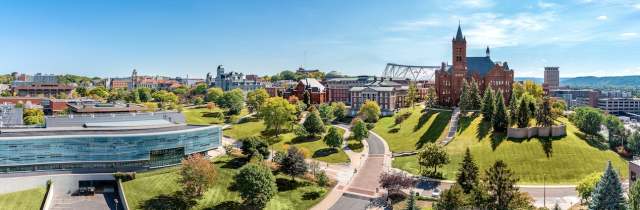
Our History course is inspiring, innovative and compelling. Our Newton Park campus is beautiful, but it’s also a historic resource in its own right and a way into a wide range of historical subjects and approaches – from reading a landscape to analysing the symbols of wealth and power and tracing their international connections.
The nearby cities of Bath and Bristol offer an extraordinary wealth of material for historical study. Bristol, after all, is where the statue of Edward Colston was toppled into the river, and made us all reflect on the ways history continues to shape the present; we need to understand where we’ve been to have a sense of where we might go next.
Develop practical and professional skills
Working collaboratively with a wide range of disciplines, we offer a unique approach to learning in and outside your subject.
You’ll become a confident communicator, able to sift through the raw materials of history and re-present your findings to any audience – on any platform. Yes, you’ll write essays. But you’ll also learn to podcast, tweet, blog, create scripts for film and radio, and adapt your style to suit a range of consumers, including young audiences. We also want you to be able to plan and initiate projects, work with your peers and with our external partners, and make a contribution to our wider community.
Our programmes are taught by people whose research embraces past and present, abstract concepts and physical structures. It crosses continents. You'll analyse big data and tiny fragments of text, and explore objects and images, the rhetoric of power, the gaps in the narrative.
What can you do with a History degree?
Our research has impact internationally, nationally and locally. Our teaching draws on this and on our work as policy advisors, trustees, fundraisers, advocates, curators, conservators, broadcasters, game designers, web editors, poets. Our graduates go on to do all of these things – and more.
Professional placement year
Overview
This optional placement year provides you with the opportunity to identify, apply for and secure professional experience, normally comprising one to three placements over a minimum of nine months. Successful completion of this module will demonstrate your ability to secure and sustain graduate-level employment.
By completing the module, you'll be entitled to the addition of 'with Professional Placement Year' to your degree title.
History
Year one (Level 4) modules
- Europe and the World I: Encounters and Perspectives
- Europe and the World II: Revolution, Nationaism and Modernity
- Worlds of Ideas
- Narratives of Belonging
- Protest and Persuasion
- Thinking Together: Humanities in the 21st Century
Year two (Level 5) modules
- The Practice of History: Archives, Analysis, Evidence
- History Matters? The public, Politics and the Past
- How to do Things: Objects, People and Place
- Presenting the Past
- People, Politics and Belief in Early Modern Britain
- An Ungovernable People?
- Modern Empires and Global Exchanges
- Diaspora, Migration and Race
- Digital Humanities
- Working Together
Year three (Level 6) modules
- History Project
- Conflict and Community:;The Politics of Heritage
- The Past as Professional Practice: Archaeology, Museums and Heritage
- The City in Global Contexts
- People, the Past and the Environment
- Nation and Race in the Early Modern Atlantic World
- Propaganda, Censorship and Intelligence
- Suffrage, Status and Society
- From Decolonisation to Globalisation
Philosophy and Ethics
Year one (Level 4) modules
- Truth and Reality
- Ethics and Values
- Worlds of Ideas
- Thinking Together – Humanities in the 21st Century
Year two (Level 5) modules
- Ethics in the Contemporary World
- Asian Philosophies
- Ecology and Nature
- Digital Humanities
- Applying Philosophy
- Reading Philosophy
- Atheism and Unbelief
- Working Together
Year three (Level 6) modules
- Philosophy Project
- Asian Philosophies
- Ecology and Nature
- Utpoia and Dystopia
- Making Sex
- Life and Meaning
- Comparative Philosophy
Program Intended Learning Outcomes
History
Historical knowledge Systematic historical knowledge, covering a number of different periods and places, themes and approaches, continuities and discontinuities.
The discipline of history Critical understanding and application of the theoretical and methodological approaches that underpin the study of history.
The use of sources The identification, interrogation, and critical analysis and synthesis of a variety of primary sources, including written, visual and material sources.
Uses of history Critical engagement with and reflection on the uses of history in the past and the present.
Interpretation Critical understanding of the complexity of reconstructing the past, and the problematic and varied nature of historical evidence and interpretation.
Philosophy and Ethics
Philosophical knowledge Systematic and comparative knowledge of the complexity of philosophical enquiry, argument and analysis that draws on a range of philosophical traditions.
Philosophical debates Systematic understanding and analysis of selected debates and theories in the study of philosophy,;and their application to contemporary issues, challenges and problems.
Ethical perspectives Detailed comparative understanding, interpretation and application of ethical concepts and theories from a transcultural perspective, using contemporary examples.
Theory and method Integration, evaluation and application of concepts, theory, methods from different philosophical traditions in support of independent analyses of a diverse range of issues and problems.
Reasoning and argument The ability to formulate, critique, defend and evaluate your own and others’ philosophical positions with clarity, precision and intellectual rigour, leading to a sustained and independent line of argument.
Work Experience and Placement Opportunities
As this is an applied course, there are opportunities throughout to use your knowledge, analysis and skills in a variety of different ways, including through project-related work inside and outside the University. The following modules have been explicitly designed to incorporate professional development, opportunities for working with external partners and placements of varying lengths and complexity. The University will support you in making the most of these opportunities, and in ensuring that they work for you in relation to the skills you want to develop, your ambitions and aspirations, and the needs of those with whom we work.
If you’ve ever wondered what you can do with a History degree, the answer may surprise you. Yes, you could become a historian or a teacher, but we prepare you for so much more.
The transferable skills you’ll gain on this course will prepare you for a career that demands confident communication at all levels. This could include curation for museums and heritage organisations, or work in the public and social services, the charitable sector, or the NHS. You’ll be well-equipped for project management, education, and events management. You may also choose to continue your studies at postgraduate level.
Our graduates have gone into such areas as financial services, the police force, and management training schemes with major retailers, as well as worked for the National Trust, Bristol Old Vic and the Southbank Centre.
How will I be taught?
You’ll get to grips with your subject through lectures, seminars, workshops, and individual tutorials.
You can take advantage of the learning support provided across the University, whether to develop your writing skills or to learn how to use new techniques and technologies.
To find out more about how we teach and how you'll learn, please read our Learning and Teaching Delivery Statement.
Course length
Three years full time, or four years full time with professional placement year. Part time available.