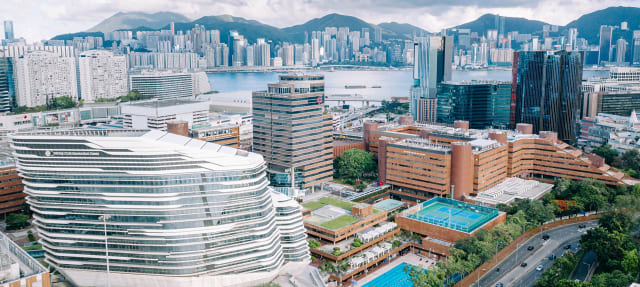
Education System in Hong Kong
56 Institutions·700+ ProgramsKey Takeaways
- DSE test-takers (2022–2023): 48,762 students sat the DSE; 42.3% met minimum marks for public university entry
- Average tuition (annual): Local students: HKD 42,100; non-local students: HKD 140,000
- Visa proof of funds minimum: Student visa requires proof of funds of at least HKD 120,000
- Estimated living costs: HKD 10,000 to HKD 15,000 per month
- Application window for next academic year: Typical deadlines fall between December and March
Degree Structure and Qualification Pathways
• Hong Kong higher education issues bachelor's, master's and doctoral awards.
• Undergraduate entry often follows the Diploma of Secondary Education (DSE) results.
• DSE data (2022–2023):
- 48,762 candidates took the exam.
- 42.3% met the minimum marks for public university entry.
• Postgraduate pathways include taught master's and research doctoral programs.
• Vocational awards and sub-degree qualifications are available through vocational providers.
Types of Higher Education Institutions
• Public universities (UGC-funded):
- The University of Hong Kong
- The Chinese University of Hong Kong
- Hong Kong University of Science and Technology
- Funding note: publicly funded universities receive block grants from the University Grants Committee.
• Vocational and technical providers:
- Vocational Training Council (primary provider listed in sources)
- Funding note: vocational training is funded by government subventions.
• Self-financing and private providers:
- Sources note the existence of self-financing tertiary providers but do not list names.
• Secondary school types that affect progression: aided schools and Direct Subsidy Scheme (DSS) schools. DSS schools may charge additional tuition.
Academic Calendar and Key Dates
• Application deadlines for entry to the following academic year typically fall between December and March.
• Intake timing and term dates vary by institution and program.
• Action items for applicants:
- Check each university's program page for exact intake months.
- Prepare supporting documents well before December if you aim for the main intake.
- Expect each institution to publish term dates and exam weeks on its website.
Grading and Credit Systems
• Grading scales and credit rules are set by each university.
• There is no single grading table provided in the source material.
• Practical steps:
- Check the specific program page for grade conversion, credit load per year, and progression rules.
- For international comparison, request a syllabus or credit transcript when applying.
Tuition, Fees, Health Insurance and Living Costs
• Average tuition (annual):
- Local students: HKD 42,100
- Non-local students: HKD 140,000
• Visa and immigration financial requirement:
- Student visa requires an acceptance letter and proof of funds of at least HKD 120,000.
- For official visa guidance, see the student visa page: student visa
• Health insurance for non-local students:
- Mandatory requirement
- Premiums range from HKD 1,500 to HKD 3,000 per year
• Estimated monthly living costs:
- HKD 10,000 to HKD 15,000 per month
• Scholarships and financial aid:
- Hong Kong Scholarship for Excellence Scheme
- University-specific scholarships are available at individual institutions
How the System Compares Internationally
• Language of instruction:
- Many programs are taught in English.
• Research emphasis:
- The system places strong emphasis on research and innovation.
• Outbound student numbers (2022–2023):
- 35,361 Hong Kong students study abroad
- 5,867 studied in the United States (increase of 0.3% from the previous year)
• Practical comparison points for applicants:
- Check program language and research focus when comparing to foreign institutions.
- Compare fees, living costs, and scholarship offers across systems before deciding.
Practical Checklist for International Applicants
• Required documents often include:
- Formal acceptance letter from the university
- Proof of funds (minimum HKD 120,000 for visa)
- Academic transcripts and certificates
- Health insurance arrangement (non-local students)
• Steps to apply and enroll:
- Identify programs and check deadlines (Dec–Mar for next academic year).
- Prepare transcripts and language evidence if required.
- Apply to the university and await an offer.
- Use the offer to apply for a student visa and show proof of funds.
- Arrange health insurance and housing before arrival.
Frequently asked questions
How much does it cost to study in Hong Kong?
Average annual tuition is HKD 42,100 for local students and HKD 140,000 for non-local students. Estimated living costs are HKD 10,000 to HKD 15,000 per month; health insurance premiums for non-local students range HKD 1,500–3,000 per year.
When should I apply to universities in Hong Kong?
Typical application deadlines for the next academic year fall between December and March. Check each university for exact dates, as intake months and program deadlines vary by school.
What proof of funds do I need for a student visa?
The student visa requires an acceptance letter and proof of funds of at least HKD 120,000. Use the university offer to apply for the visa and confirm the exact financial documentation with immigration authorities.
Which universities are the main public institutions in Hong Kong?
Examples of publicly funded universities include The University of Hong Kong, The Chinese University of Hong Kong, and Hong Kong University of Science and Technology. Public universities receive block grants from the University Grants Committee.
Are there vocational options in Hong Kong higher education?
Yes. The Vocational Training Council is the primary vocational provider mentioned in the sources, and vocational education is funded by government subventions.