Top 5 Medical School Trends in 2026
If you’re a current medical student or thinking about applying in the year ahead you may be wondering: hat does the future hold? Here are 5 trends to expect in 2026.

✨ 5-second summary
- Admission to medical school will remain highly competitive, though overall acceptance rates have improved slightly.
- Medical schools are rapidly integrating AI into their curricula.
- Family medicine, psychiatry, and internal medicine are the most in-demand medical specialties.
- Nearly half of medical students experience burnout.
- Simulation-based training has expanded, allowing students to develop clinical skills in low-risk environments.
The landscape of medical education continues to shift in response to policy changes, technological advancement, and evolving student needs. Here is a closer look at five trends to expect moving forward.
Ready to start your medical school journey?
Browse thousands of medical programs worldwide! 🩺
Browse Medicine programs →1. Admissions will remain highly competitive
Getting into medical school has never been easy, and the data confirms that competition remains fierce.
The average acceptance rate among ranked medical schools hovers around 7.7% according to U.S. News & World Report data from 2025. At the 20 most selective institutions, that figure drops to approximately 3.4%, with some programs accepting fewer than 2.4% of applicants.
However, there's an encouraging trend: overall acceptance rates have increased slightly in recent years. In 2024, approximately 44.5% of all MD applicants matriculated to at least one medical school, up from around 41% a decade earlier. This shift reflects both fluctuations in application volume following the pandemic-era surge and incremental growth in medical school class sizes.
Experts continue to recommend applying broadly, including to both MD and DO programs. Osteopathic medical schools generally maintain higher acceptance rates and may offer excellent training opportunities.
2. AI integration will reshape medical education
Artificial intelligence continues to shape the world, and healthcare is no exception. Medical schools are racing to integrate AI into their curricula. Only around 14% of American medical schools had developed a generative AI curriculum by 2024, compared to 60% of undergraduate programs. That gap is closing rapidly as institutions recognize the urgency of preparing future physicians for AI-assisted practice.
Stanford Medical School launched its AI in Medical Education initiative in September 2025, which aims to "integrate foundational AI knowledge, clinical applications, and ethical reasoning into medical education". It's now required for all medical and physician assistant students.
Harvard Medical School has introduced several courses on AI in healthcare:
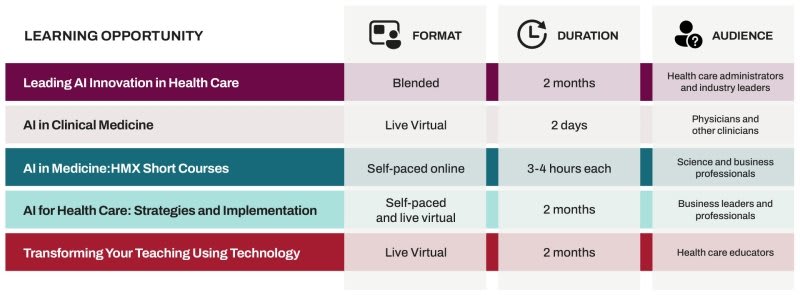
AI tools for studying medicine such as OpenEvidence already exist, and are bound to continue getting better in the upcoming year.
3. Most in-demand specialties for 2026
The physician shortage continues to shape career opportunities for medical students, and certain specialties are experiencing particularly acute demand. The Association of American Medical Colleges projects a shortage of up to 86,000 physicians by 2035, with some fields facing more severe gaps than others.
These are the specialties that will continue seeing a demand increase, according to AMN Healthcare's 2025 report on physician recruiting:
- Family medicine: The most sought-after specialty, with an average starting salary of $280,000. Family physicians treat patients across all ages and offer flexibility in practice settings.
- Psychiatry: Average starting salary of $315,000. Rising mental health concerns have intensified demand for these specialists.
- Internal medicine: Average starting salary of $305,000. Internists manage complex chronic conditions in adult patients.
- Cardiology: Average starting salary of $574,000. Cardiovascular disease remains a leading cause of death, driving sustained need.
- Gastroenterology: Average starting salary of $565,000. Digestive disorders affect a significant portion of the population.
- Anesthesiology: Average starting salary of $475,000. Essential for surgical procedures across all specialties.
- Obstetrics and gynecology: Average starting salary of $373,000. Women's healthcare remains a critical and underserved area.
Primary care specialties will remain critical
Currently, only about 24% of the physician workforce practices family medicine, general internal medicine, or pediatrics, and fewer than 10% of internal medicine residents plan to pursue generalist careers.
Psychiatry will continue to rise in demand
Psychiatry has recently emerged as another high-demand field. Mental health concerns continue to rise, and the shortage of psychiatrists has been exacerbated by increasing demand for mental health services.
Salaries in psychiatry rose 10.4% year over year in 2025, reflecting the competition for these specialists.
Geriatrics still remains underserved
Geriatrics has emerged as one of the most critical yet underserved specialties.
By 2034, the population of people age 65 and over is expected to grow by 42% from 2019 levels, yet the geriatric workforce has actually decreased over the past few decades.
The US currently has only about 7,300 geriatricians, yielding roughly 1 geriatrician for every 10,000 older adults. The American Geriatrics Society estimates that one geriatrician can effectively care for about 700 patients, meaning the country would need approximately 33,000 geriatricians to adequately serve its aging population
Medical specialists will stay in demand
For students weighing specialty choices, the data suggests strong job security across most fields. In a 2023 survey of residents in their final year of training, 56% of residence reported receiving 100 or more job offers during their training. Students willing to practice in these areas will find exceptional demand for their services.

4. Student mental health and burnout remain critical concerns
Research continues to document alarming rates of burnout and mental health challenges among medical students.
- A multinational meta-analysis estimated burnout prevalence of 44.2% among medical students.
- Studies indicate that medical students experience higher rates of depression, anxiety, and suicidal ideation than their non-medical peers.
The no-mistakes-allowed schooling leads to mental health issues
Students often enter medical school with mental health profiles similar to the general population, but their psychological well-being deteriorates during medical training.
Recent research has identified psychological safety, defined as the perception that a learning environment is safe for interpersonal risk-taking, as a significant protective factor against burnout. Environments where mistakes, questions, and expressions of anxiety are not tolerated contribute to heightened stress.
Medical schools are responding in different ways
Medical schools are trying different interventions to help, including, but not limited to:
- Pass-fail grading for preclinical years, which research shows can nearly halve burnout rates compared to traditional grading systems.
- Personal days during clerkships
- Wellness curricula
- Barrier-free access to mental health resources

5. Simulation-based training will continue expanding
Simulation-based training has become an integral component of medical education, and schools continue to expand their simulation capabilities.
- High-fidelity patient simulators, or manikins, can display vital signs, respond to treatments, and mimic a wide range of medical conditions.
- Virtual reality and augmented reality technologies allow students to explore anatomical structures in three dimensions, practice surgical procedures, and navigate immersive clinical scenarios.
These technologies allow students to develop clinical reasoning and procedural skills in low-risk environments. When students struggle in simulation, instructors can debrief and repeat scenarios to reinforce learning without any risk to actual patients.
Research demonstrates that simulation training improves clinical performance, increases learner confidence, and reduces errors in patient care.
New medical school facilities reflect this emphasis:
- The Brody School of Medicine at East Carolina University is constructing a new building expected to be completed in 2027 that will feature expanded simulation and standardized patient centers.
- Wake Forest University School of Medicine's new Charlotte campus has centered its curriculum on simulation and real-life clinical scenarios from day one, with students using virtual touchscreens and high-fidelity manikins rather than traditional lectures.
Conclusion
Medical school remains challenging to enter and demanding to complete. Yet 2026 presents distinctive opportunities alongside its challenges.
Students entering medical education now will be among the first trained systematically to work with AI tools in clinical practice. They will graduate into a healthcare system grappling with significant policy changes and workforce needs.
For aspiring and current medical students, staying informed about these trends will help them navigate the path ahead and position themselves to make meaningful contributions to medicine.

Sara EvansAuthor
🌟 Expertise: Design, Business
Sara is the Content Team Manager at educations.com, where she oversees editorial content for students worldwide. She holds a Bachelor's degree in Interactive Media Design and a Master's degree in Digital Business with a specialization in higher education marketing. Her own study abroad experience in the Netherlands gives her direct, personal insight into the opportunities and challenges students face when pursuing education internationally.
Find a program in these categories